



We value your privacy

    We use cookies to analyse traffic, improve our website and show relevant content. You choose what we may use. Read our privacy policy.

    Live AI news
    Back to articles// AI Trends

    Ads in ChatGPT: What Does This Mean for Users and Businesses?

    OpenAI will soon display advertisements to free ChatGPT users; paying subscribers remain exempt.

    Remy Gieling Published 17 januari 2026 Updated 15 juni 2026 4 min read
    OpenAI toont straks advertenties aan gratis ChatGPT-gebruikers; betalende abonnees blijven gevrijwaard.

    OpenAI has announced that it will begin testing advertisements within ChatGPT. This development has been anticipated for some time but is now officially being rolled out. What does this mean for the future of AI assistants and for you as a user or organization?

    OpenAI will soon start testing ads in the United States. These ads will appear in the free version of ChatGPT and in the new ChatGPT Go subscription, available for $8 per month. Users of the higher-tier subscriptions Plus ($20), Pro ($200), Business, and Enterprise will not see any advertisements.

    The new ChatGPT Go subscription is now available worldwide and offers expanded access to messaging, image creation, file uploads, and the memory feature all for a fraction of the price of the Plus subscription.

    How will the advertisements be implemented?

    OpenAI promises a strict separation between advertisements and the responses generated by ChatGPT. Sponsored content will appear at the bottom of responses, clearly labeled as 'sponsored,' and only when there is a relevant product or service based on the ongoing conversation.

    The company maintains five core principles: responses will never be influenced by advertisers, conversations remain private and are not sold, and users retain full control including the ability to disable personalization or delete ad data. Notably, OpenAI explicitly claims not to optimize for time-in-app, a fundamentally different approach than the engagement-driven models of Meta and TikTok.

    The test begins with logged-in adults in the US. Accounts of users under 18 will be excluded, and advertisements will not appear near sensitive topics such as health, mental health, or politics.

    Why now?

    With nearly 900 million weekly active users the vast majority of whom use the free version this step was inevitable. Advertisements provide OpenAI with a way to generate income from the massive user base that is not (yet) paying for a subscription.

    According to sources from The Information, OpenAI projects approximately $2 billion in new revenue this year from ads and commerce-related turnover, rising to more than $10 billion by 2027. For comparison: the global search ad market is estimated to be worth $355 billion in 2025. Google alone generated $198 billion from Search Ads in 2024. This is the ecosystem OpenAI is now entering.

    The Information points out an interesting difference compared to Netflix, which introduced ads in 2022 and is expected to generate only $3.26 billion in US ad revenue by 2026. While Netflix has a minority of subscribers on the ad-tier, the vast majority of ChatGPT users are on the free version which allows for much faster scaling.

    What does this mean for businesses?

    This development confirms that AI chatbots are becoming mainstream distribution channels. Just as Google Search and Amazon shopping queries dominated the last decades, conversational AI interfaces are becoming the next battleground for advertising budgets.

    For marketers and businesses, this means new opportunities. OpenAI speaks of 'conversational interfaces' that go beyond static messages and links. Users will soon be able to ask questions directly about an advertised product to reach a purchase decision a fundamentally different experience than traditional display or search ads.

    For smaller businesses and emerging brands, AI ads can level the playing field. With AI tools, anyone can create high-quality advertising experiences that help people discover options they might never have found otherwise.

    The big question: trust vs. commerce

    OpenAI's promise is clear: "Answers are not influenced by advertisers." Practice will show how long that boundary holds under commercial pressure. What is clear: the question is not if other AI players will follow, but when. Google has already taken steps to sell ads in its AI chatbot. The race for the AI advertising market has begun.

    What can you do?

    As an individual user, you will soon have a choice: accept ads in the free version, upgrade to ChatGPT Go for $8/month with ads, or choose an ad-free Plus subscription ($20/month). For organizations using ChatGPT for business, Business and Enterprise remain completely ad-free.

    As a marketer or business, it is essential to monitor this development closely. Conversational AI advertisements could become an entirely new way to reach customers with opportunities for interaction that traditional advertising formats do not offer.

    Want to know more about how AI developments like these impact your organization? Contact ai.nl for advice, training, and strategic guidance.

    Getting started with AI yourself? Check out our e-learning AI Agents or AI workshops for teams.

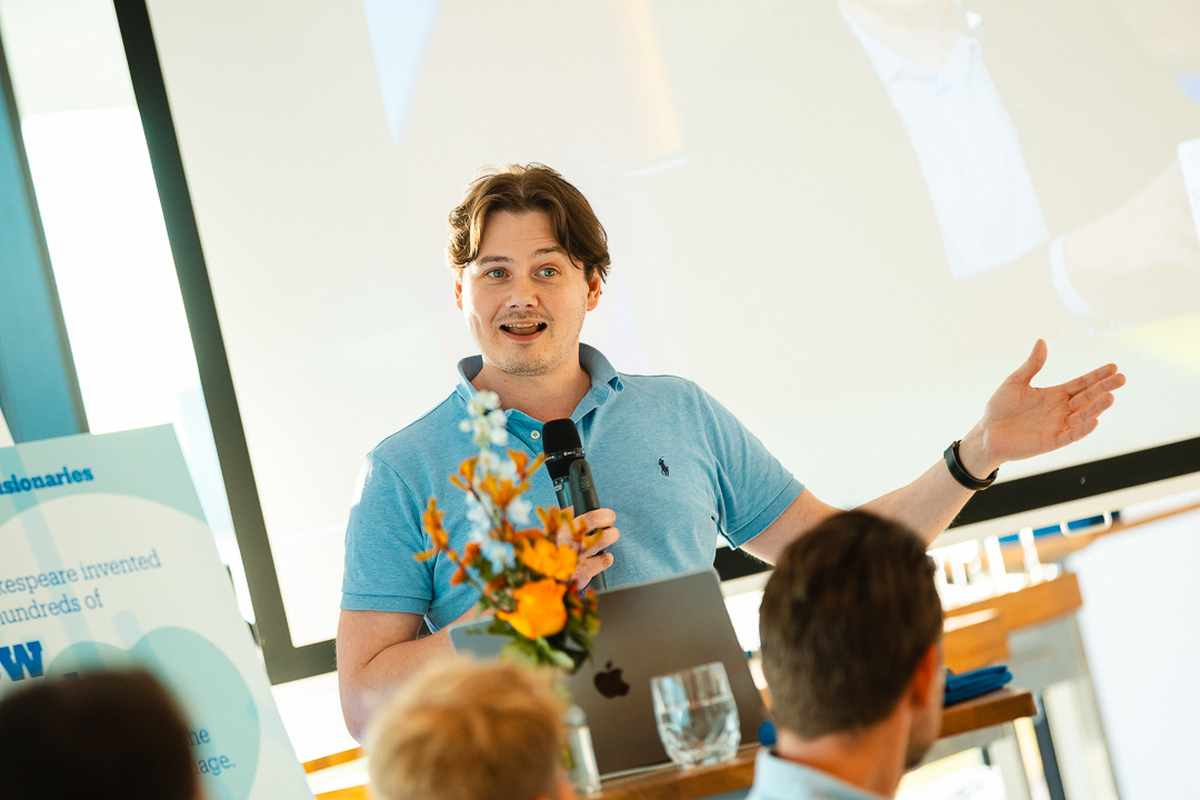
    Remy Gieling — Mede-oprichter, AI-expert & bestseller-auteur bij ai.nl

    // About the author

    Remy Gieling

    Mede-oprichter, AI-expert & bestseller-auteur

    Tech-expert (1988) gespecialiseerd in kunstmatige intelligentie en mede-oprichter van ai.nl, The Automation Group, Proxies en eBrain.ai. Oud-hoofdredacteur van diverse zakenmerken en daardoor een geoefend verteller op het podium en in de media. Verzorgt jaarlijks 150+ AI-keynotes in binnen- en buitenland en is gastdocent aan Nyenrode. Co-auteur van zeven boeken, waaronder 'Handboek AI Strategie' en 'AI Agents', en bekend als presentator op radio en RTL Z. Reist langs de labs van OpenAI, Nvidia en Tencent en vertaalt de nieuwste doorbraken naar inzichten die leiders direct kunnen toepassen.

    LinkedIn
    // GET STARTED// How we can help

    Beyond reading — let AI work for you.

    // CONTINUE READINGAll articles

    More from AI Trends.

    Newsletter

    Always up to date on AI.

    Once a month: cases, frameworks and concrete examples of what works in practice. No noise.

    No spam. Unsubscribe any time.