

We value your privacy

    We use cookies to analyse traffic, improve our website and show relevant content. You choose what we may use. Read our privacy policy.

    Live AI news
    Back to articles// AI Trends

    AI & Finance: How OpenAI Scales to Thousands of Contracts with One Additional Hire

    OpenAI's internal AI agent processes thousands of contracts per month while keeping the finance team lean; automating tedious work while experts maintain control.

    Remy Gieling Published 30 januari 2026 Updated 15 juni 2026 4 min read
    OpenAI's interne AI agent verwerkt duizenden contracten per maand terwijl het finance team lean blijft; automatisering van het saaie werk, experts houden controle.

    OpenAI shows how the company uses its own technology to transform financial processes. Their internal 'DocuGPT' agent now processes more than a thousand contracts per month without the team needing to grow proportionally. From hundreds to thousands of contracts per month. In less than six months. With only one additional employee. That is the reality OpenAI's finance team faced. The solution? Stop hiring more people and build an AI agent instead.

    The problem: manual work that doesn't scale

    Every enterprise contract OpenAI signs contains crucial information: start dates, billing terms, renewal clauses. In the beginning, the process was straightforward: read it line by line, manually transcribe it to a spreadsheet, move on to the next.

    __wf_reserved_inherit

    But when volume doubled (and doubled again), this manual process broke. Wei An Lee, AI Engineer at OpenAI, describes the problem: the team went from hundreds to over a thousand contracts per month while only adding one person. It was clear that this approach was unsustainable.

    The solution: a contract data agent

    Instead of solving the problem with more people, the finance and engineering teams collaborated to build a 'contract data agent'. The design principle was simple yet intentional: remove the repetition from contract review, but keep experts firmly at the helm.

    The agent operates in three steps:

    1. Data collectionPDFs, scanned copies, even photos with handwritten notes what were previously dozens of inconsistent files now flow through a single pipeline.

    2. Inference with promptingVia retrieval-augmented prompting (RAG), the system parses contracts into structured data. Importantly, it doesn't dump a thousand pages into the context. It retrieves only relevant information, reasons about it, and shows how it reached its conclusions.

    __wf_reserved_inherit

    3. Expert reviewFinance experts review the structured output, complete with annotations and references for non-standard terms. The agent flags what is unusual; humans are brought in to review.

    "We don't just parse, we reason"

    What distinguishes this approach from simple data extraction is the reasoning component. The system demonstrates why a specific term is considered non-standard, cites the reference material, and allows the reviewer to confirm the ASC 606 classification.

    The result? Data that is ready for validation by the next morning. What used to take hours now arrives annotated and ready for review.

    The impact: scaling without linear growth

    The benefits are concretely measurable:

    • Faster turnaround: review times halved, completed overnight
    • Higher capacity: thousands of contracts processed without growing the team proportionally
    • Smarter context: non-standard terms flagged with reasoning and references
    • Searchable results: tabular output in the data warehouse for easy analysis

    Every cycle of human feedback sharpens the agent, making each subsequent review faster and more accurate.

    "This is the only way we can scale"

    Wei An Lee summarizes: "This is the only way we can scale the way OpenAI scales. Without this, you would have to grow your team linearly with contract volume. This allows us to stay lean while undergoing hypergrowth."

    This architecture now also supports procurement, compliance, and even month-end closing. The same principle applies: automate the routine work, keep humans responsible for the judgment.

    Engineers describe it as "manual work that has already been done" not decisions that have been replaced. Finance teams still write the narrative of the numbers; the agent ensures they don't spend their day on tedious manual entry.

    A blueprint for responsible AI transformation

    What started as a fix for contracts has grown into a new way of working within finance. Data parsing runs at night. Professionals focus on analysis and strategy. Leaders scale with confidence alongside growth, without making teams grow in lockstep.

    According to OpenAI, the contract data agent is a blueprint for how AI can responsibly transform regulated, high-stakes work.

    What does this mean for Dutch organizations?

    This example from OpenAI illustrates a pattern we see at more and more organizations: AI agents that don't work instead of experts, but for experts by taking away the boring, repetitive work so professionals can focus on where they truly add value.

    The lesson is not that you must build a complex agent tomorrow. The lesson is that the combination of human expertise and AI automation yields scaling advantages that are impossible with purely human capacity.

    For finance teams, legal departments, and other knowledge workers handling large volumes of documents: this is where the future of work is heading. Not replacement, but augmentation. Not fewer people, but people engaged in work that matters.

    Want to know how your organization can deploy AI agents to scale without linear growth? Contact us for a no-obligation discussion about the possibilities.

    Getting started with AI yourself? Check out our e-learning AI Agents or AI workshops for teams.

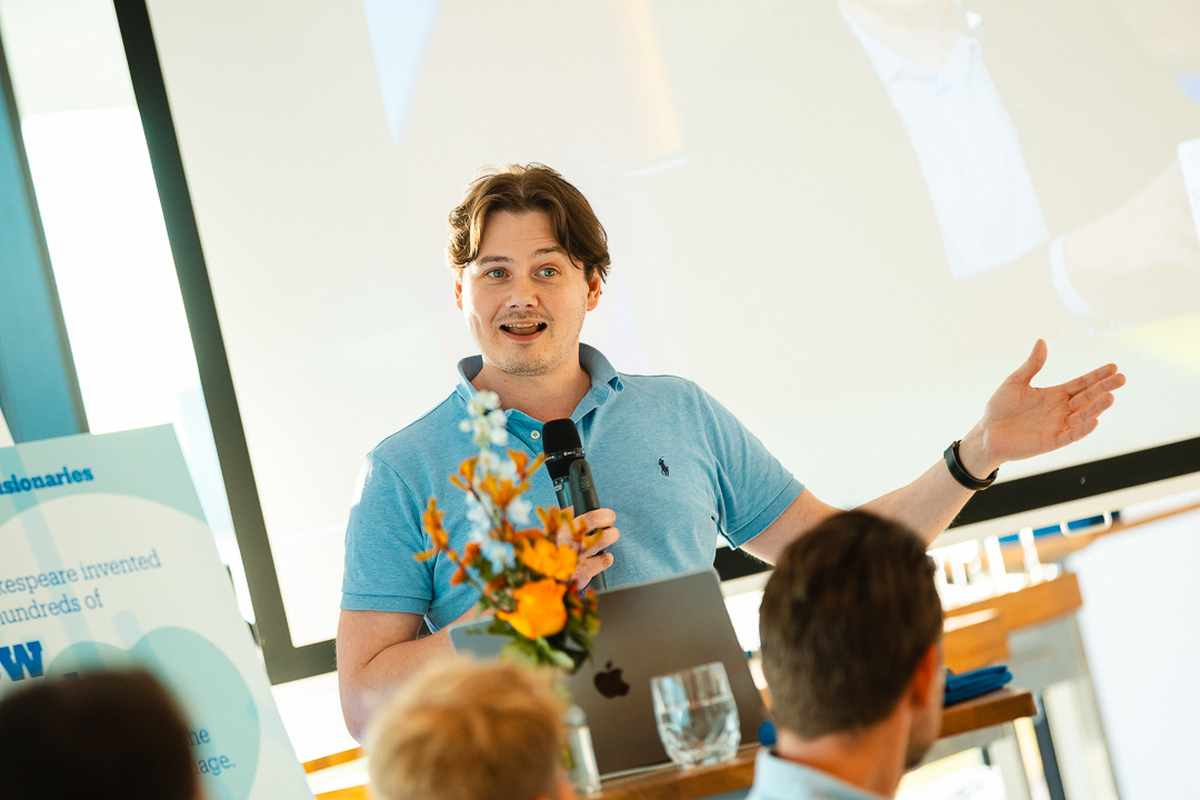
    Remy Gieling — Mede-oprichter, AI-expert & bestseller-auteur bij ai.nl

    // About the author

    Remy Gieling

    Mede-oprichter, AI-expert & bestseller-auteur

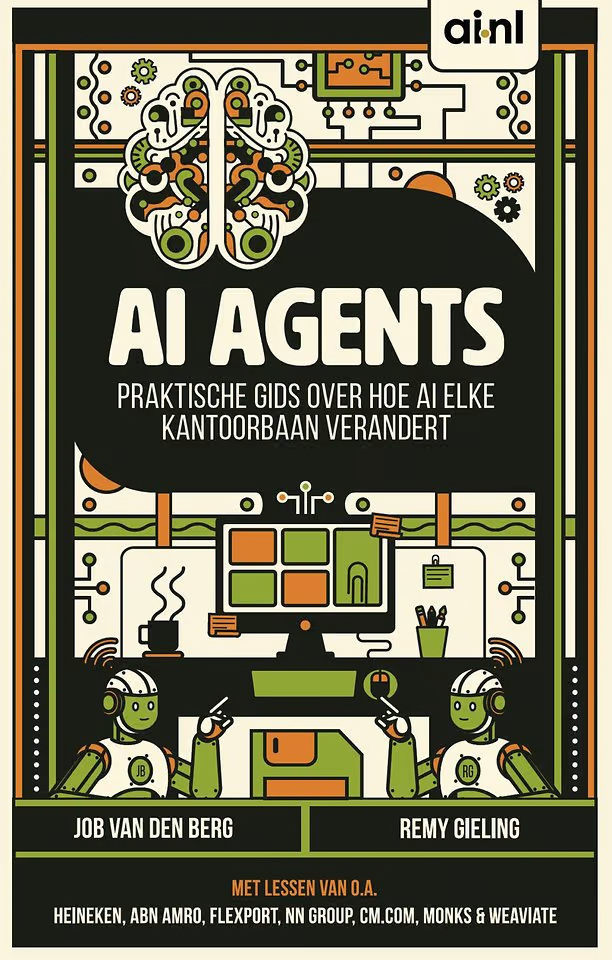
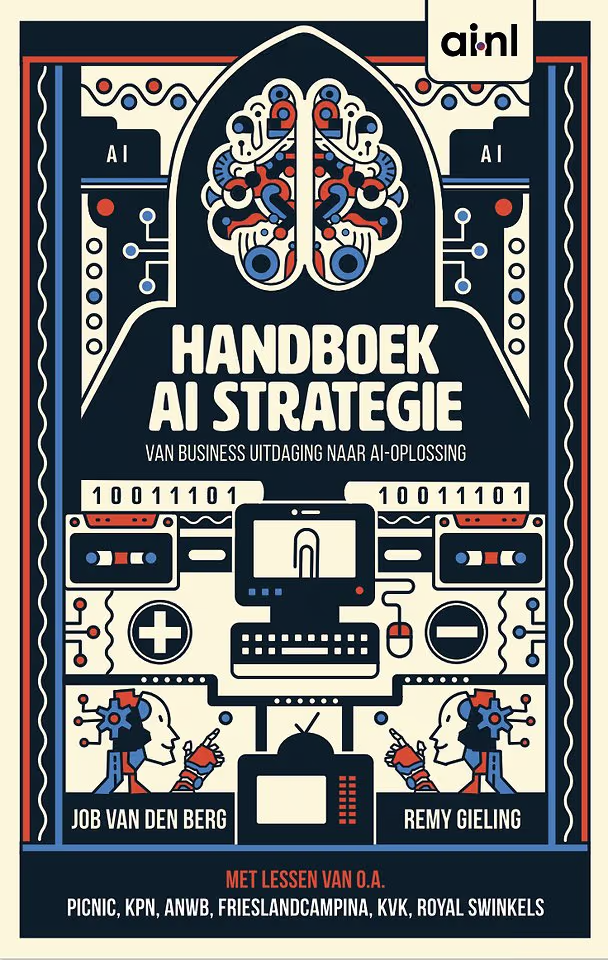
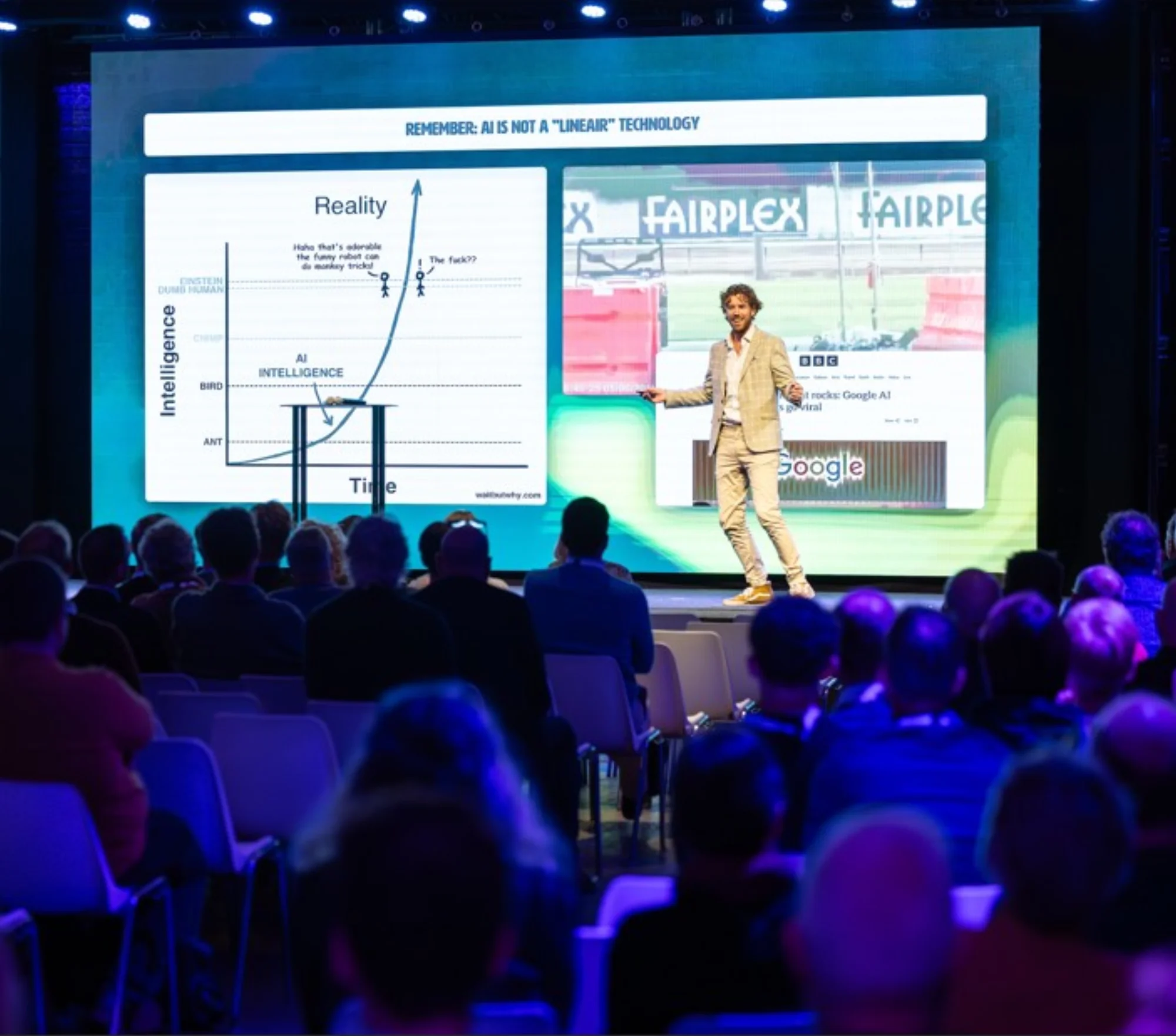
    Tech-expert (1988) gespecialiseerd in kunstmatige intelligentie en mede-oprichter van ai.nl, The Automation Group, Proxies en eBrain.ai. Oud-hoofdredacteur van diverse zakenmerken en daardoor een geoefend verteller op het podium en in de media. Verzorgt jaarlijks 150+ AI-keynotes in binnen- en buitenland en is gastdocent aan Nyenrode. Co-auteur van zeven boeken, waaronder 'Handboek AI Strategie' en 'AI Agents', en bekend als presentator op radio en RTL Z. Reist langs de labs van OpenAI, Nvidia en Tencent en vertaalt de nieuwste doorbraken naar inzichten die leiders direct kunnen toepassen.

    LinkedIn
    // GET STARTED// How we can help

    Beyond reading — let AI work for you.

    // CONTINUE READINGAll articles

    More from AI Trends.

    Newsletter

    Always up to date on AI.

    Once a month: cases, frameworks and concrete examples of what works in practice. No noise.

    No spam. Unsubscribe any time.