





We value your privacy

    We use cookies to analyse traffic, improve our website and show relevant content. You choose what we may use. Read our privacy policy.

    Live AI news
    Back to articles// AI Fundamentals

    Better Output from ChatGPT, Gemini, and Claude? Stop Perfecting Prompts - Provide Better Context

    For years, "writing a good prompt" was considered the most important skill for those wanting to get the most out of AI. That is no longer the case. What truly advances Large Language Models like ChatGPT, Claude, and Gemini today is context.

    Job van den Berg Published 17 maart 2026 Updated 15 juni 2026 3 min read
    Een prompt is de instructie of vraag die je aan een taalmodel stelt. Context is de informatie die je meegeeft om het model te helpen begrijpen wie je bent, wat je wilt bereiken en voor wie de output bedoeld is.

    For years, "writing a good prompt" was considered the most important skill for those wanting to get the most out of AI. That is no longer the case. What truly advances Large Language Models like ChatGPT, Claude, and Gemini today is context. Here are two techniques that work immediately.

    From prompting to context: what is the difference?

    A prompt is the instruction or question you pose to a language model. Context is the information you provide to help the model understand who you are, what you want to achieve, and who the output is intended for.

    In the past, language models were limited enough that the precise phrasing of your prompt made the difference between useful and useless output. Models had to be directed literally.

    Modern models understand language much better. They require less rigid instructions but they still cannot guess what you mean if you don't tell them. The gap is no longer in understanding the question, but in the lack of background. That is precisely where context beats perfect phrasing.

    Two techniques for providing more context

    Tip 1 Ask the language model to interview you

    This might feel unnatural, but it is one of the most powerful techniques. Instead of stuffing all the information into one long prompt yourself, ask the model to ask you the questions it needs to perform the task effectively.

    The model then determines for itself which context is missing. Your answers fill exactly the gaps that otherwise lead to vague or generic output. The result aligns much better with what you are looking for without you having to know in advance everything you need to provide.

    Example prompt: "Before you begin: first ask me the questions you need in order to execute this as effectively as possible."

    Tip 2 Ask for improvement suggestions after the output

    You have had a proposal, email, or text written. Fine but don't stop there. Then ask the model: "What could you improve about this output?"

    Language models are strong in problem-solving thinking. They can take something that already exists to a higher level but only if you give them the chance. By asking this question, you force the model to reflect on its own work, while simultaneously giving it more context about what works well and what doesn't in the output already provided.

    Example prompt: "What could you improve about this answer? Provide concrete improvement suggestions or an improved version."

    Why do these techniques work so well?

    Both tips have one thing in common: they increase the amount of relevant information the model has at the moment it formulates an answer. That is exactly what context does.

    With the interview technique, the model actively collects missing information before it starts. With the improvement round question, it reflects on the delivered output with a critical eye and combines that reflection with what it already knows about good text, structure, or argumentation.

    In both cases, you give the model more input to work with. And more relevant input almost always leads to better, more tailored output.

    Summary apply immediately

    Context is more important than phrasing: the quality of your output depends on how much relevant information you provide, not on how beautifully your question is structured.

    Let yourself be interviewed: ask the language model what information it needs before it starts. Your answers form the context.

    Ask for improvement: after the output is generated, ask the model what can be improved. You will receive concrete points for improvement or a stronger version.

    Repeat: both techniques are stackable. Use them together for the strongest results.

    Frequently Asked Questions

    Why is context more important than a good prompt in AI?

    Modern language models have significantly improved in understanding language. As a result, the precise phrasing of your question matters less and less. What does matter is the underlying information you provide. Without context, the model lacks the information to deliver a tailored answer regardless of how well your prompt is written.

    How do I let an AI interview me?

    Send a message such as: "Before you begin, first ask me the questions you need to execute this well." The language model will then respond with targeted questions. Your answers provide the context with which it can deliver a much better result.

    What is the difference between a prompt and context in AI?

    A prompt is the instruction or question you ask. Context is the background information you provide alongside it: who you are, what your goal is, who the output is for, and which tone is appropriate. Context makes a prompt effective.

    Can I ask an AI to improve its own output?

    Yes, and it works surprisingly well. After the language model has provided output, ask: "What could you improve about this?" The model then reflects on its own work and provides concrete improvement points or an improved version.

    Does this work with ChatGPT, Claude, and Gemini?

    Yes. Both techniques work with all major language models. They are based on how language models function in general, not on specific features of a single platform.

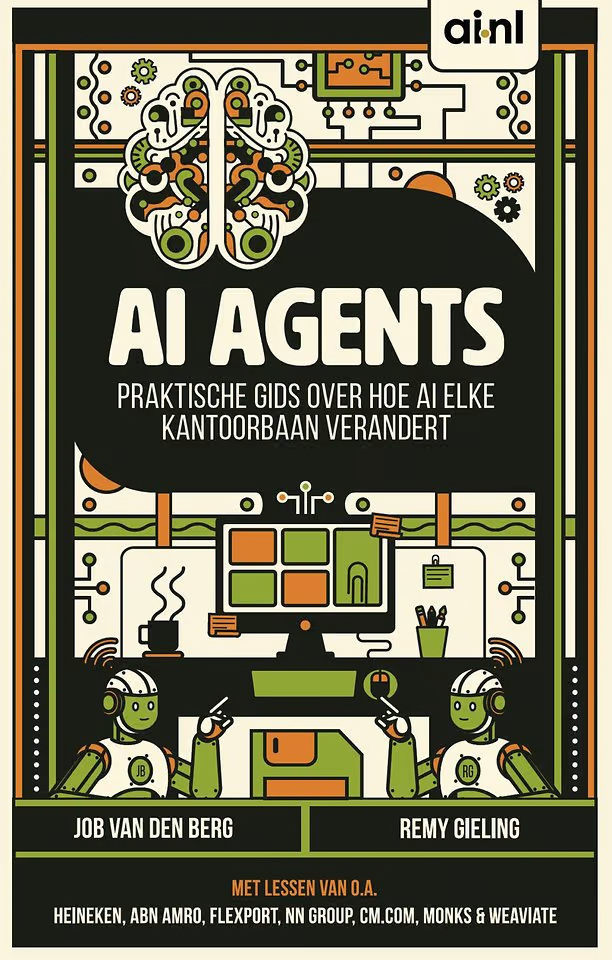
    Want to get started with AI yourself? View our e-learning AI Agents or AI workshops for teams.

    Job van den Berg — Mede-oprichter, AI Keynote Spreker & Techondernemer bij ai.nl

    // About the author

    Job van den Berg

    Mede-oprichter, AI Keynote Spreker & Techondernemer

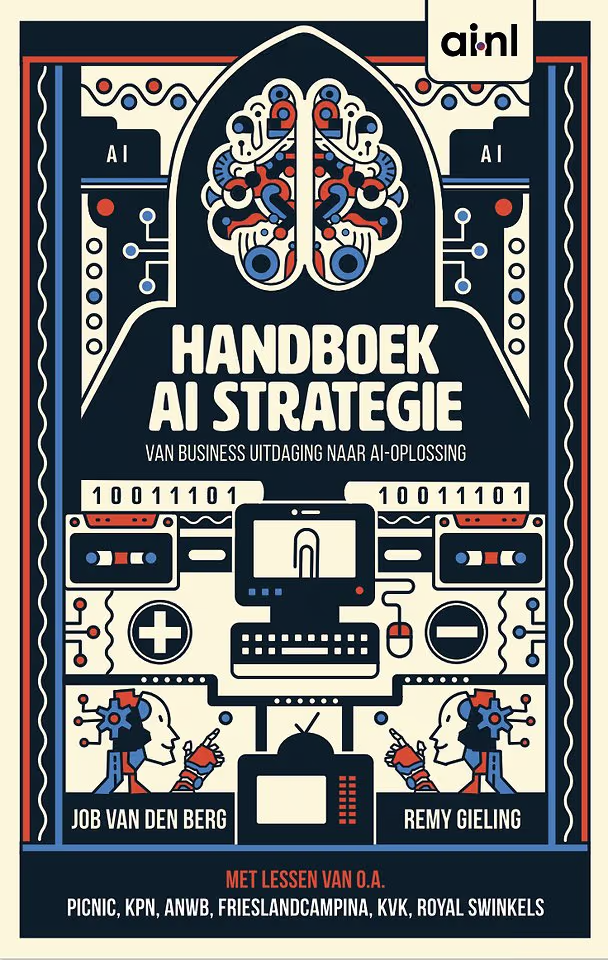
    Tech-ondernemer (1989) met een achtergrond als socioloog (Research Master (MSc) in statistiek en sociologie) en een van de meest gevraagde keynote sprekers over AI en data in Nederland. Als mede-oprichter van Ai.nl, The Automation Group en Proxies leidt hij engineers die agentic AI van prototype naar productie brengen binnen enterprises. Op het podium vertaalt Job die hands-on praktijk naar concrete strategieën. Eerder was Job Chief Data bij o.a. DPG Media en Kantar. Hij is co-auteur van 5 boeken over AI waaronder 'AI Agents' en 'Handboek AI Strategie' en een veelgevraagd expert in de landelijke media.

    LinkedIn
    // GET STARTED// How we can help

    Beyond reading — let AI work for you.

    // CONTINUE READINGAll articles

    More from AI Fundamentals.

    Newsletter

    Always up to date on AI.

    Once a month: cases, frameworks and concrete examples of what works in practice. No noise.

    No spam. Unsubscribe any time.