


Chatbots Summer 2026: What Distinguishes ChatGPT, Claude, Gemini, Copilot, Grok, Mistral, and Perplexity?
Seven AI chatbots, seven wildly different strategies. A sober comparison for those choosing a chatbot for their team in the summer of 2026-based on official releases, not marketing.

In the summer of 2026, the chatbot market stands fundamentally differently than it did a year ago. The great ChatGPT-vs-Claude rivalry has evolved into a seven-player field where each player claims a different segment of the market. No winner, no loser-but seven distinctly different choices.
I get this question in every AI training session now: which chatbot should our company use? This article is my answer, based on what the providers themselves have published in recent months.
The short answer: a single chatbot no longer exists
The era when one chatbot was "the best" is over. In 2026, you no longer choose a tool-you choose a strategy. ChatGPT aims for the complete OS level (own browser, agent stack), Claude for autonomous coding agents, Gemini for everything Google already touches, Copilot for your M365 data, Grok for real-time X data, Mistral for European sovereignty, and Perplexity for the browser itself as an interface.
What you must choose depends on where your work happens. Below are the facts per player-and what that means in practice.
ChatGPT (OpenAI): the ecosystem around your work
OpenAI published GPT-5.2 on December 11, 2025 as "the most advanced frontier model for professional work and long-running agents." The figures OpenAI reports: 70.9% on GDPval (vs. 38.8% for GPT-5), 100% on AIME 2025, and 86.2% on ARC-AGI-1. In plain English: GPT-5.2 outperforms human professionals more often on well-specified knowledge tasks across 44 professions.
But the real differentiator isn't in benchmarks. It’s in the rest of the stack:
- ChatGPT Atlas-since October 21, 2025, its own browser with ChatGPT at its core. A sidebar in every window, agent mode that executes tasks for you.
- Custom GPTs and projects remain the most developed "agent-without-code" platform.
- ChatGPT Enterprise users save 40–60 minutes per day according to OpenAI; heavy users save 10+ hours per week.
For whom? Organizations that want to roll out AI broadly and prefer a single vendor for chat, agents, and browser. My standard advice for companies that don't yet have a strong preference.
Claude (Anthropic): the coding and agent specialist
Anthropic released a series of models in 2025–2026: Sonnet 4.5 on September 29, 2025, Opus 4.5 on November 24, 2025, and the API docs now also mention Opus 4.7. The message is consistent: this is the model for code, agents, and computer use.
Concrete figures from Anthropic itself:
- Opus 4.5 is "state-of-the-art" on SWE-bench Verified.
- Price: $5 / $25 per million tokens in/out-significantly lower, making Opus-level performance more accessible.
- Long agent runs, integrations with Excel, Chrome, and desktop, and no more hard ceilings on long conversations in the Claude app.
Additionally, Claude is deeply integrated into Claude Code (CLI agent), MCP (Model Context Protocol-now adopted by OpenAI, Microsoft, and others), and Computer Use for controlling applications.
For whom? Developers, data professionals, and teams building agents for long-running tasks. In our AI Agent construction projects, we choose Claude more often than any other model.
Gemini (Google): the multimodal generalist
Google released Gemini 3 on November 18, 2025, with Gemini 3 Pro as its flagship. According to Google's own documentation, Gemini 3 Pro is their "most advanced reasoning model" with a 1M-token context window and native support for text, audio, image, video, PDFs, and full code repositories.
Since April 2026, there is also a native Gemini app for Mac (Option + Space brings up Gemini in any application, it can see your screen). On vision benchmarks, Google claims state-of-the-art on document, spatial, screen, and video understanding.
The real advantage: deep integration with Workspace, Search, Android, Chrome, and Google Cloud. If your organization already runs on Google Workspace, Gemini is included for free in most plans.
For whom? Workspace organizations, multimodal workflows (lots of video, images, long documents), and teams that prefer to stay with Google rather than add a second vendor.
Microsoft Copilot: AI on your M365 data
In 2026, Microsoft made the strategic move to make Copilot truly agentic within Office. On April 22, 2026, "Copilot's agentic capabilities in Word, Excel and PowerPoint" became generally available. Before that, on March 9, 2026, Microsoft announced Frontier Transformation-Copilot and agents as the engine for enterprise-wide work.
What makes Copilot unique:
- Works on your real data (SharePoint, OneDrive, Outlook, Teams) with your existing permissions.
- Copilot Studio for low-code agent building that deploys directly into Teams.
- Under the hood: multiple models (OpenAI as well as proprietary Microsoft models).
Important nuance: without proper DLP, sensitivity labels, and SharePoint hygiene, a Copilot rollout is a data leak risk. We always advise training the IT side alongside the users.
For whom? Any organization heavily reliant on Microsoft 365. Almost always the right choice alongside-not instead of-ChatGPT or Claude.
Grok (xAI): real-time, multi-agent, X-native
xAI released three generations in nine months: Grok 4 in July 2025, Grok 4.1 Fast in November 2025, and Grok 4.20 in February 2026. The headline features of Grok 4.20:
- 2M-token context window-currently the largest among commercial chatbots.
- Native multi-agent mode with up to 16 coordinating sub-agents.
- Toggleable reasoning in three API variants.
- Real-time access to X (Twitter), which makes news, sentiment, and trend queries distinctive.
A successor (Grok 5, trained on Colossus 2) has been announced by xAI but is not yet available as a product at the time of writing-so take such claims with a healthy grain of salt.
For whom? Teams needing real-time social/news context, or those experimenting with multi-agent setups and very long documents.
Mistral: the European answer
Mistral remains the most sharply positioned European alternative. Mistral Large 3 appeared on December 2, 2025-an open-weight multimodal model with granular MoE architecture (41B active parameters out of 675B total, 256k context, $0.50/$1.50 per million tokens). In April 2026, Mistral Medium 3.5 followed as a 128B-dense model, replacing Magistral and Mistral Medium 3.1 in Le Chat.
Le Chat Enterprise has been available since May 2025 as a unified AI platform with data connectors, capable of running on-premises or in a private cloud-this is the differentiator many European, regulated, or government organizations seek.
For whom? Organizations with strict requirements for data sovereignty, EU hosting, or open-weight deployment. Often a serious third option alongside ChatGPT and Copilot.
Perplexity: the browser IS the chatbot
Perplexity is betting on a different frame: not "AI in your browser," but the browser itself as an AI assistant. Comet was released on July 9, 2025, for Mac/Windows, on November 20, 2025, for Android, and on March 18, 2026, for iOS. Since October 2025, Comet has been free to download.
What Comet does that others don't:
- Understands context across all your tabs.
- Executes tasks (drafting emails, filling forms, comparisons) while you continue working.
- Comet Enterprise adds SSO, audit logs, and domain policies.
Additionally, with its search API and Sonar models, Perplexity remains the go-to chatbot choice when you want answers-with-sources-for example, for research, due diligence, or GEO/SEO work.
For whom? Knowledge workers and researchers who spend 85% of their day in a browser, and companies wanting to run agents across web services without building custom integrations.
Comparison Table: Summer 2026
| Chatbot | Strongest Model (Summer 2026) | Differentiating Strength | Weak Point |
|---|---|---|---|
| ChatGPT | GPT-5.2 (Dec '25) | Complete ecosystem incl. Atlas browser, GPTs, agents | Increasingly expensive for enterprise |
| Claude | Opus 4.5 / 4.7 | Coding, agents, MCP, Computer Use | Fewer consumer features |
| Gemini | Gemini 3 Pro | 1M context, multimodal, Workspace integration | Inconsistent product experience |
| Copilot | M365 Copilot (agentic GA April '26) | Works on your real M365 data | Requires strong IT governance |
| Grok | Grok 4.20 | 2M context, multi-agent, real-time X | Compliance and image/reputation queries |
| Mistral | Large 3 / Medium 3.5 | EU hosting, open weights, on-prem | Smaller ecosystem |
| Perplexity | Comet + Sonar | Browser-native, agent over web, sources | Not for deep coding tasks |
How to choose?
Three questions I ask in every training session:
- Where does the work happen? In Office? → Copilot. In a browser? → Perplexity Comet. In code? → Claude. In Workspace? → Gemini.
- How sensitive is your data? EU-only or on-prem needed? → Mistral. M365 permissions leading? → Copilot. Otherwise, open playing field.
- Do you want one vendor or the best tool per task? One vendor is cheaper and simpler; multi-tool delivers more value but requires governance.
In practice, we usually see a combination of two to three with clients: for example, Copilot for M365 work, ChatGPT or Claude for deeper tasks, and Perplexity for research. That is the realistic 2026 stack.
What this means for your organization
The biggest mistake I see organizations make: choosing one chatbot based on a blog post, starting a rollout project, and discovering six months later that 60% of employees are quietly also using another model. That’s called shadow AI, and in 2026, it has become the norm.
Better: choose a primary chatbot for broad rollout, explicitly allow a second for specialist roles, and train your teams on the difference. That is exactly what we do in our Chatbot training and the specialized ChatGPT, Claude, and Microsoft Copilot trainings.
The chatbot market of summer 2026 is no longer a race. It is a portfolio choice. Treat it that way.
Sources: official release pages and documentation from OpenAI, Anthropic, Google, Microsoft, xAI, Mistral, and Perplexity (accessed May 2026). All benchmarks and data come directly from the providers themselves-interpretation and advice are my own.
// About the author
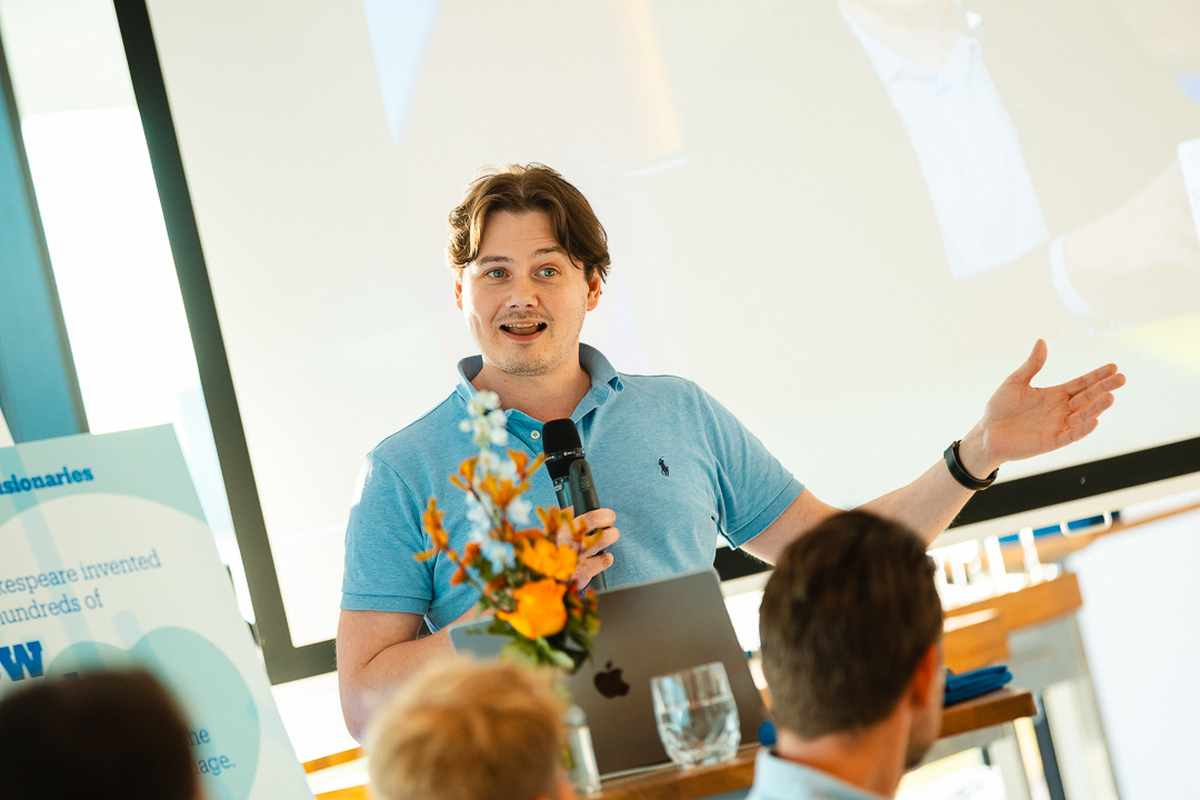
Remy Gieling
Mede-oprichter, AI-expert & bestseller-auteur
Tech-expert (1988) gespecialiseerd in kunstmatige intelligentie en mede-oprichter van ai.nl, The Automation Group, Proxies en eBrain.ai. Oud-hoofdredacteur van diverse zakenmerken en daardoor een geoefend verteller op het podium en in de media. Verzorgt jaarlijks 150+ AI-keynotes in binnen- en buitenland en is gastdocent aan Nyenrode. Co-auteur van zeven boeken, waaronder 'Handboek AI Strategie' en 'AI Agents', en bekend als presentator op radio en RTL Z. Reist langs de labs van OpenAI, Nvidia en Tencent en vertaalt de nieuwste doorbraken naar inzichten die leiders direct kunnen toepassen.
LinkedIn