

We value your privacy

    We use cookies to analyse traffic, improve our website and show relevant content. You choose what we may use. Read our privacy policy.

    Live AI news
    Back to articles// AI Trends

    More Humanoids Than Humans in the Office Within 7 Years – How Figure AI is Reinventing the Future of Work

    During a recent conversation between Marc Benioff (Salesforce) and Brett Adcock, founder and CEO of Figure AI, a bold claim was made: "Within five to seven years, there will be more humanoids than humans in our offices."

    Job van den Berg Published 15 oktober 2025 Updated 15 juni 2026 4 min read
    Marc Benioff (CEO Salesforce) in gesprek met Brett Adcock (CEO Figure AI)

    According to Brett Adcock, founder and CEO of Figure AI, we are on the verge of a radical shift.
    During a conversation with Marc Benioff (Salesforce), he predicted that within five to seven years, more humanoid robots than humans will be active in the office.

    “They will do everything we do now talking to us in real-time, learning, working.
    This is not a vision for 2045. This is happening now,” said Adcock.

    It sounds like science fiction, but the technology is developing faster than ever. From robotics to artificial intelligence, we are at the beginning of a new era where machines don’t just execute tasks but collaborate with humans as colleagues.

    What Figure AI aims to achieve

    Figure AI is working on developing humanoids – robots that can move, listen, speak, and learn independently.
    Their goal is ambitious: to build robots that can function in virtually any human environment, from offices and factories to restaurants and retail stores.

    Adcock emphasizes that this is not a matter of decades, but of the coming decade.

    “Within five to seven years, humanoids will be working alongside us.
    By next year, we will already have more in our own offices than humans,”
    he stated.

    The hardware is becoming cheaper, production more scalable, and software increasingly smarter thanks to neural networks trained on human data.

    From science fiction to daily reality

    What once existed only in films like Ex Machina or I, Robot is now becoming reality.
    At Figure AI, humanoids are already working on complex tasks from walking and identifying objects to communicating with humans in natural language.

    Adcock even described a future where restaurants are run entirely by robots:

    “Walk into a Burger King in five years. The odds are high that the burgers will be made by humanoids.”

    That sounds futuristic, but companies worldwide are already experimenting with AI-driven labor: from customer service to logistics and production.

    __wf_reserved_inherit
    Visit to Figure AI headquarters in San José

    The infrastructure behind humanoids

    During the interview, Marc Benioff wondered if this future wouldn't require enormous amounts of computing power perhaps even a Manhattan-sized data center.

    Adcock explained that Figure is working on a hybrid model:

    • Onboard AI systems that make local decisions,
    • linked to cloud data that continuously provides new information.

    This creates an ecosystem of self-learning robots that become increasingly smarter a step toward autonomous, connected AI systems that can function anywhere.

    What does this mean for our work?

    Figure AI's vision goes beyond technology: it touches the core of our society.
    If humanoids become commonplace within a few years, our definition of work will change fundamentally.

    • Repetitive tasks will disappear or be automated.
    • New roles will emerge at the intersection of human and machine.
    • Corporate cultures must adapt to collaboration with non-human colleagues.

    Adcock emphasizes that the goal is not to replace humans, but to enhance them.
    Humanoids can take over dangerous, physically demanding, or monotonous work, allowing humans to focus on creativity, empathy, and strategy.

    Literally building science fiction

    As Adcock put it:

    “We’re literally building sci-fi right now.”

    The next ten years will determine how this new “species” the humanoid integrates into our world.
    Not in 2045, but within a single career span. We are at the beginning of an era where the line between human and machine blurs and where collaboration, not replacement, will make the difference.

    Conclusion: the future of work is not far away it is here

    The message from Brett Adcock and Marc Benioff is clear: the future of work is no longer a distant dream, but a rapidly approaching reality. Humanoids will gain a permanent place in the workplace as colleagues, assistants, and innovators.
    The companies that learn to collaborate with AI and robotics today will be the leaders of a completely new economy tomorrow.

    __wf_reserved_inherit
    In the photo with a Figure AI humanoid robot
    Job van den Berg — Mede-oprichter, AI Keynote Spreker & Techondernemer bij ai.nl

    // About the author

    Job van den Berg

    Mede-oprichter, AI Keynote Spreker & Techondernemer

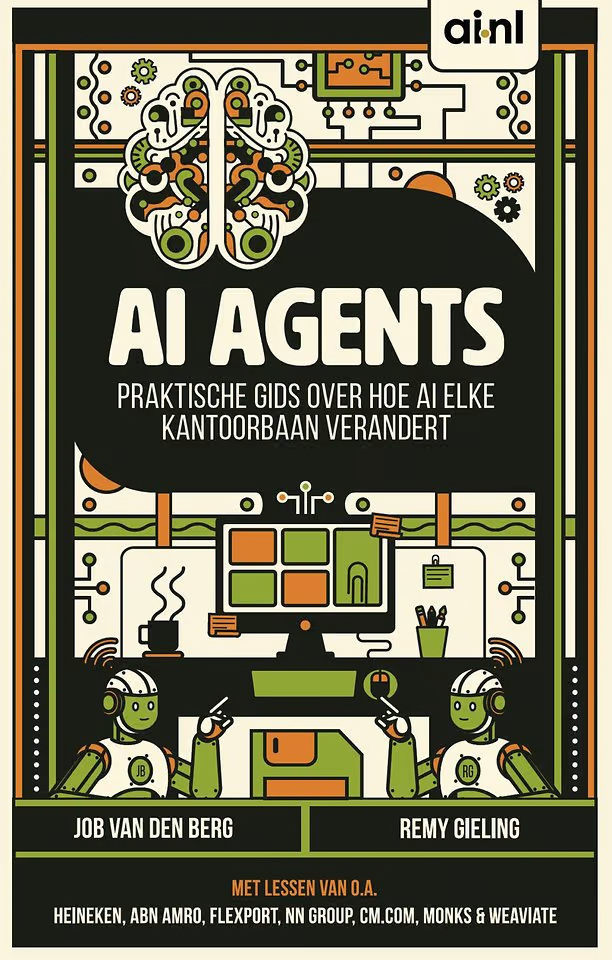
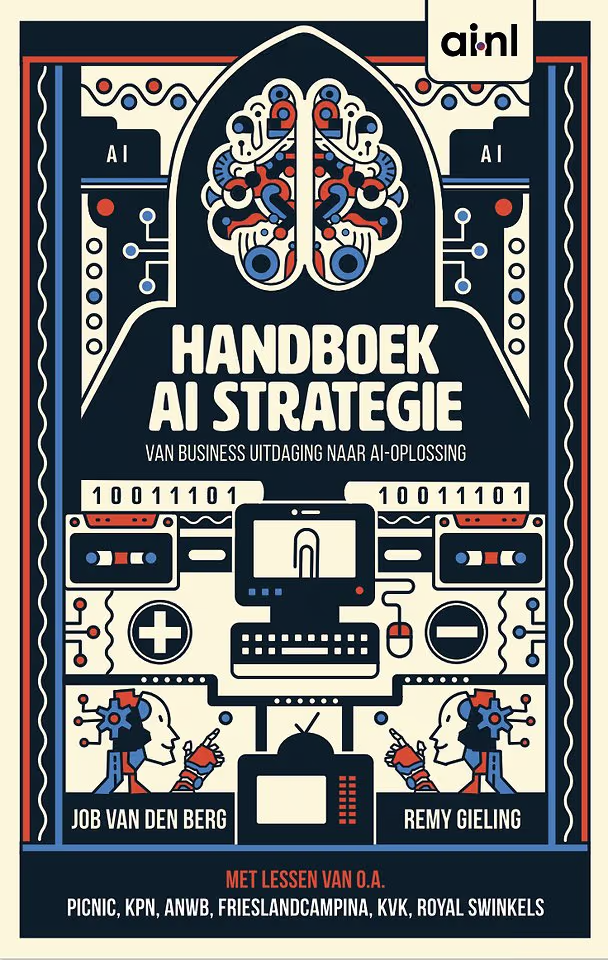
    Tech-ondernemer (1989) met een achtergrond als socioloog (Research Master (MSc) in statistiek en sociologie) en een van de meest gevraagde keynote sprekers over AI en data in Nederland. Als mede-oprichter van Ai.nl, The Automation Group en Proxies leidt hij engineers die agentic AI van prototype naar productie brengen binnen enterprises. Op het podium vertaalt Job die hands-on praktijk naar concrete strategieën. Eerder was Job Chief Data bij o.a. DPG Media en Kantar. Hij is co-auteur van 5 boeken over AI waaronder 'AI Agents' en 'Handboek AI Strategie' en een veelgevraagd expert in de landelijke media.
    LinkedIn
    // GET STARTED// How we can help

    Beyond reading — let AI work for you.

    // CONTINUE READINGAll articles

    More from AI Trends.

    Newsletter

    Always up to date on AI.

    Once a month: cases, frameworks and concrete examples of what works in practice. No noise.

    No spam. Unsubscribe any time.