

We value your privacy

    We use cookies to analyse traffic, improve our website and show relevant content. You choose what we may use. Read our privacy policy.

    Live AI news
    Back to articles// AI Fundamentals

    Why the Salami-Slicing Method Fails in the Era of AI Agents

    AI Agents are rapidly changing the way organizations operate. While many companies see AI as a tool to reduce headcount and cut costs, this 'salami-slicing' mindset causes them to miss the true power of AI. Discover why focusing on growth rather than reduction is the key to success.

    Job van den Berg Published 20 november 2025 Updated 15 mei 2026 3 min read
    Zie AI niet als excuus om te minimaliseren, maar als katalysator om te maximaliseren.

    AI Agents are rapidly changing the way organizations operate. More and more companies are discovering that processes can be automated, repetitive tasks are disappearing, and employees have more time for strategic and creative activities. Yet one thing stands out: many organizations immediately reach for the 'salami-slicing' method. They view AI primarily as a means to reduce FTEs and lower costs. But it is precisely this mindset that ensures they miss the power of AI entirely.

    Focusing on cost-cutting is a dangerous strategy. It not only diminishes human capital within the organization but also limits innovative power and reduces agility. It creates fear and resistance among employees and ensures that AI is approached primarily as a defensive move rather than an engine for growth. Companies that use AI Agents only to save money will fall behind in the long run. They are looking too small, too cautiously, and too narrowly.

    The biggest misconception is that AI automatically means fewer people are needed. In reality, AI provides the opportunity to achieve much more with the same team. In fact, even if you eventually work with fewer FTEs, it opens the door to greater ambitions. AI makes it possible to enter new markets, develop products and services faster, serve more customers, and streamline internal processes in a way that was previously simply not feasible. It is not an instrument for contraction, but an accelerator for growth.

    Therefore, organizations need a fundamental mindset shift. Not thinking in limitations, but in opportunities. Not looking at how to cut, but how to scale. It revolves around the question of which goals you previously didn't dare to set but can now achieve thanks to AI. How to deploy employees specifically for their human strengths: creativity, empathy, strategic insight, and innovative capacity. AI Agents take over routine tasks, making the role of human talent more valuable than ever.

    Those who use AI only to save costs undermine themselves. Those who use AI to realize growth build a future-proof organization. This requires leaders who dare to think in possibilities, who are willing to redesign processes, and who create a culture where employees collaborate with AI instead of fearing it.

    The conclusion is clear: put away the cheese slicer. Do not see AI as an excuse to minimize, but as a catalyst to maximize. Companies that dare to think in terms of growth will be the winners of tomorrow. Companies that continue to cut will only fall further behind. The future belongs to organizations that expand their ambitions, empower their people, and deploy AI Agents as strategic partners in value creation.

    Job van den Berg — Mede-oprichter, AI Keynote Spreker & Techondernemer bij ai.nl

    // About the author

    Job van den Berg

    Mede-oprichter, AI Keynote Spreker & Techondernemer

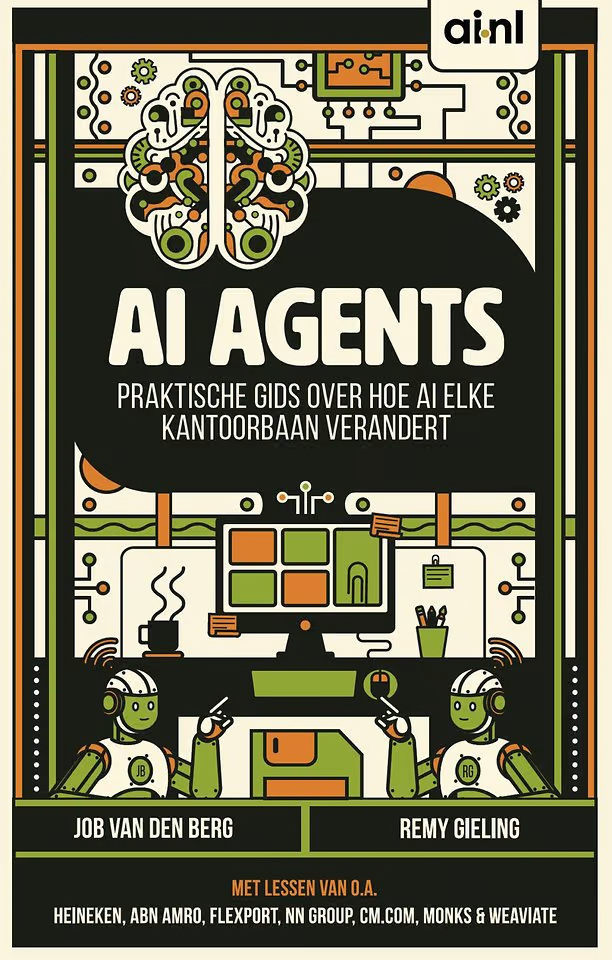
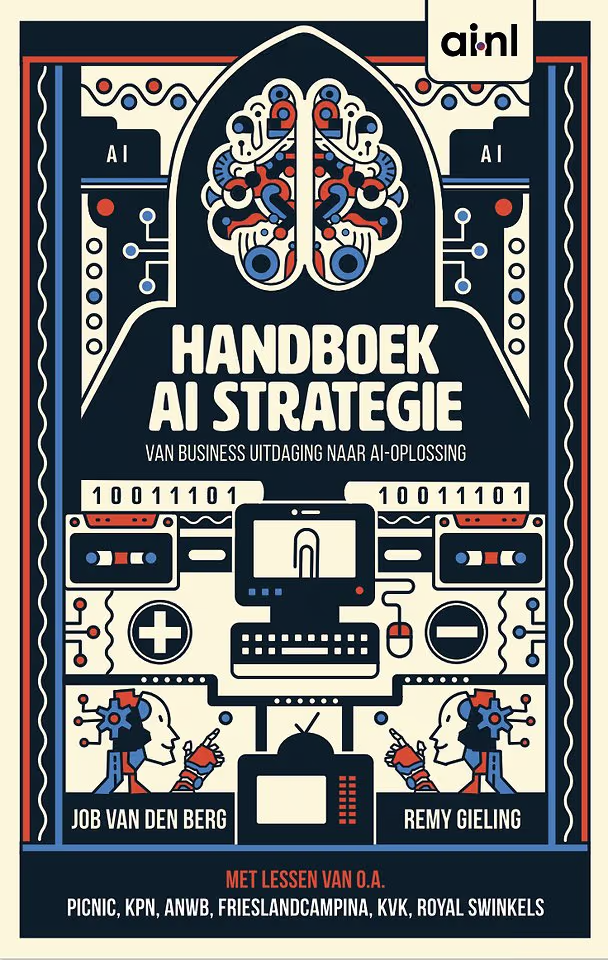
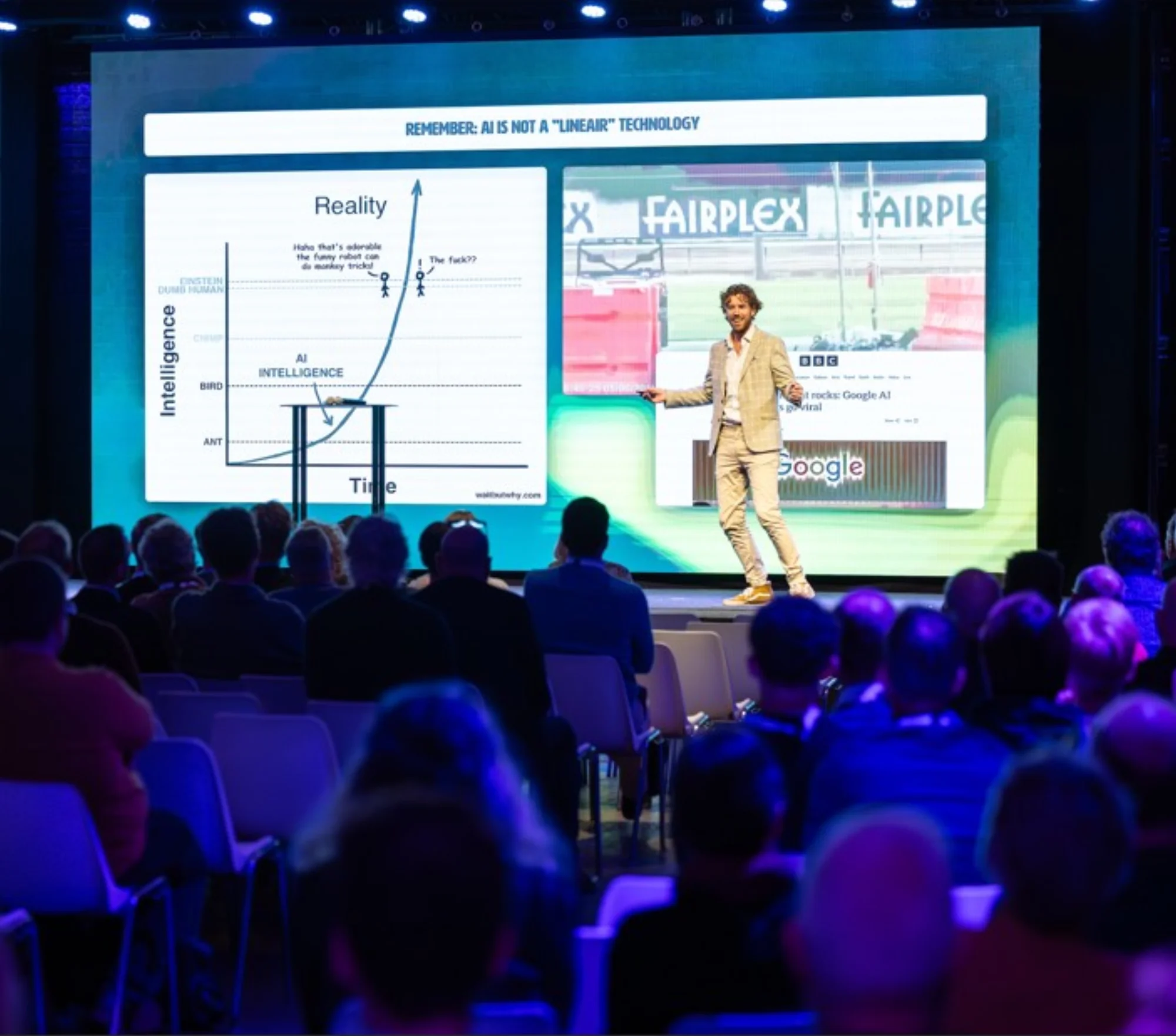
    Tech-ondernemer (1989) met een achtergrond als socioloog (Research Master (MSc) in statistiek en sociologie) en een van de meest gevraagde keynote sprekers over AI en data in Nederland. Als mede-oprichter van Ai.nl, The Automation Group en Proxies leidt hij engineers die agentic AI van prototype naar productie brengen binnen enterprises. Op het podium vertaalt Job die hands-on praktijk naar concrete strategieën. Eerder was Job Chief Data bij o.a. DPG Media en Kantar. Hij is co-auteur van 5 boeken over AI waaronder 'AI Agents' en 'Handboek AI Strategie' en een veelgevraagd expert in de landelijke media.
    LinkedIn
    // GET STARTED// How we can help

    Beyond reading — let AI work for you.

    // CONTINUE READINGAll articles

    More from AI Fundamentals.

    Newsletter

    Always up to date on AI.

    Once a month: cases, frameworks and concrete examples of what works in practice. No noise.

    No spam. Unsubscribe any time.