Grok Bot vs Meta Muse: which personal AI assistant works for entrepreneurs?
Grok Bot, Meta Muse, OpenClaw and Hermes Agent compared for entrepreneurs: what they do, what they cost and what actually works in Europe today.
Short answer: if you work in the Netherlands, Meta Muse is currently off the table. Muse went live on 8 September 2026 and only works in the United States, solely for adults, with no announced date for the EU. Grok Bot by SpaceXAI is the most accessible paid option for those who want to start quickly, starting at 20 dollars a month via a Cursor subscription or 30 dollars via SuperGrok. Those who want control over data and models will end up with OpenClaw or Hermes Agent: both open source, both MIT-licensed, both running on your own hardware. And both with a security profile that requires serious configuration before you unleash them on your corporate inbox.
Below are the four lined up, covering what they actually do and where they fall short.
Why this is relevant now
The dream of a digital assistant that organises things for you is older than most people think. In 1990, a group of Apple engineers left the company to found General Magic. Marc Porat, Bill Atkinson, and Andy Hertzfeld built Telescript, a programming language in which small software agents literally travelled the network to book a flight ticket or compare a price. The technology worked. The only problem was that the network it was supposed to run on did not exist yet. General Magic went under and subsequently provided the people who built the iPod, the iPhone, and eBay.
Thirty-five years later, the infrastructure is in place. What changed in 2026 is not that models became smarter. It is that they were given a computer. A browser, a file system, login credentials, and permission to act. With this, the question shifted from "what can the model come up with" to "what is it allowed to execute, and who is monitoring it".
Four products currently dominate that conversation.
The four in brief
| Grok Bot | Meta Muse | OpenClaw | Hermes Agent | |
|---|---|---|---|---|
| Creator | SpaceXAI | Meta | OpenClaw Foundation (501c3) | Nous Research |
| Launched | 11 August 2026 | 8 September 2026 | January 2026 | February 2026 |
| Type | Closed, cloud | Closed, cloud | Open source (MIT) | Open source (MIT) |
| Where it runs | Cloud computer per bot | Muse Secure VM | Your machine | Your VPS or server |
| Available in NL | Yes, via paid subscription | No | Yes | Yes |
| Starting price | $20 (Cursor Pro) or $30 (SuperGrok) p/m | Free base, US only | Free, you pay model costs | Free, you pay model costs |
| Model choice | Fixed, Grok | Fixed, Muse Spark | Free, local included | Free, local included |
| Controlled via | Desktop app and iOS | Muse app, WhatsApp, muse.ai | WhatsApp, Telegram, Slack, Signal and 25 other channels | Telegram, Discord, Slack, WhatsApp, Signal, email, CLI |
| Best for | Teams wanting immediate output | Consumers in the US | Those who want to own everything themselves | Those who want a learning agent on their own infra |
Grok Bot: AI colleagues with their own computer
SpaceXAI launched Grok Bot on 11 August 2026 with a positioning that deviates from the rest. Not assistants, but team members. You create a bot, assign it a role, and that bot gets its own computer in the cloud from which it logs into your tools.
The latter is the interesting part. In the launch post, SpaceXAI writes that bots operate in apps and websites that lack a clean API or MCP integration. They simply click through them, just as an intern would. For SMEs, this is relevant, as the industry-specific software packages many businesses rely on rarely feature a modern integration layer.
Three features stand out:
Multiple bots at once. SpaceXAI describes how employees internally place a chief of staff bot over specialists: one for the inbox, one for expenses, one for recruitment. These bots message each other and share context in threads. You can put them in a group chat where they divide the work among themselves.
Demonstrating instead of explaining. You ask a bot to watch while you perform a task once. It saves the steps as a routine and subsequently runs it independently. That is a fundamentally different learning curve compared to building workflows in an automation tool.
Separate usage pool. What you assign to a bot does not count towards your standard Grok or Cursor consumption.
What it costs. Grok Bot does not have a standalone price. Access is included in Cursor Pro (20 dollars per month), Cursor Pro+ and Ultra, SuperGrok (30 dollars), SuperGrok Plus and Heavy, and Cursor Teams Standard (40 dollars per seat) and Premium. Enterprise is handled via a waitlist.
Where it falls short. The app runs on macOS with Apple silicon and on iOS. No Windows desktop at launch, no Linux. You are tied to Grok as the model. And there is no self-hosted variant, meaning the cloud computer where your login details land is managed by SpaceXAI. For a law firm or a healthcare institution, that entails a conversation with the data protection officer before it even becomes a conversation with the IT department.
Meta Muse: the most well-thought-out security model that you are not allowed to use
Meta introduced Muse on 8 September 2026, calling it the first personal AI agent built for everyone. The ambition is broader than that of the competition: Muse not only takes over tasks but translates long-term goals into a plan and executes that plan independently. Meta cites examples such as selling a car for a better price and negotiating a bill down.
Technically, Meta has put in the most effort out of the four. Muse runs on a Muse Secure VM, a shielded virtual machine where both the agent and your data reside. Additionally, a second agent, Sentinel, runs on the same machine but is separated at the system level. Nothing Muse does reaches the internet without Sentinel's approval. Muse never sees your passwords or payment details in a readable format: they go into a separate vault that the agent can use without seeing the contents.
Furthermore, Meta promises a complete audit trail of what the agent has done and plans to do, permission per app and per action, the ability to exclude your interactions from model training, and the guarantee that conversations and VM data will not go to Meta's advertising systems. Later this year, a Muse Confidential VM will be released, featuring encryption using a key that only the user holds.
Payments are handled via Stripe's Link, with a single-use card number per purchase so that your actual card details never reach the merchant. Meta calls Muse the first AI agent covered by Link's purchase protection.
And then the problem. Muse only works in the United States and only for adults. The UK and the EU are not on the list, and Meta has not announced a date. That is no coincidence. An agent sitting in your inbox, making payments, and reading health data touches upon the GDPR and the EU AI Act on multiple points simultaneously. Meta has walked this path before: the standard Meta AI assistant only came to Europe after a delay of approximately eight months.
Regarding pricing, Meta itself is brief: free for most of what people need, with subscriptions for those who want more. In the reporting surrounding the launch, tiers of 20 and 100 dollars per month plus a free token limit have been circulating. Treat these figures as indicative until Meta publishes a formal pricing page.
OpenClaw: the open alternative that became its own category
OpenClaw began in early 2026 as a weekend project by Peter Steinberger, the Austrian developer behind PSPDFKit. According to its creator, it grew into the most starred software repository on GitHub within five months. In the summer of 2026, Y Combinator noted a count of over 346,000 stars.
The setup is fundamentally different from Grok Bot and Muse. OpenClaw runs on your machine: macOS, Windows, or Linux, and since June 2026, it also features native apps for iOS and Android. You converse with it via the channel you already use, from WhatsApp and Telegram to Slack, Signal, and iMessage. In total, 29 channels. You choose the model yourself, ranging from a hosted subscription to a locally running model on your own hardware. It offers persistent memory, full system access or a sandbox, and a skills system allowing the project to expand itself.
The governance is unusual for a project of this scale. OpenClaw is managed by the OpenClaw Foundation, an independent American 501(c)(3). The foundation employs the core developers and keeps everything under the MIT licence. There is no enterprise edition and no paid version. Donors include OpenAI, Amazon, Red Hat, and the University of Michigan, but according to the foundation, they do not own or direct the project.
Its influence now extends beyond the project itself. At Build 2026, Microsoft announced that OpenClaw runs natively on Windows within Microsoft Execution Containers, and in the same week, it launched Scout, its own personal assistant openly inspired by OpenClaw.
Where it falls short. OpenClaw requires work. You arrange the hosting, the model choice, the security, and the updates yourself. And the latter is no mere formality, as the following section illustrates.
Hermes Agent: the agent that learns from itself
Nous Research released Hermes Agent in February 2026, also under the MIT licence. Its distinguishing claim is the built-in learning loop. After completing a task, Hermes creates reusable skills itself, improves them during use, searches its own past conversations, and builds a model of who you are across sessions.
Whereas OpenClaw is tied to your machine, Hermes has been consciously detached from it. It runs on a five-dollar VPS, on a GPU cluster, or serverless. You talk to it from Telegram while the work happens on a cloud VM. The model choice is entirely free: Nous Portal, OpenRouter, OpenAI, or your own endpoint; switching is done with a single command.
The pace of development is remarkable. In the 1 July 2026 release, the team reported closing all open P0 and P1 items in the repository, about 700 in total. The 3 August release added real-time voice with on-device wake words, agent-to-agent communication via A2A 1.0, signed webhooks, and research functionality with verifiable source citations. Over 650 contributors worked on that release.
Where it falls short. Hermes is clearly built by and for people who are comfortable using a terminal. Configuration files, no managed hosting, no party to call if something goes wrong. The memory resides in markdown files, which is honest and inspectable but also basic.
The security lesson no one should skip
This is the part missing from most comparisons, and it is the most important one for entrepreneurs.
An agent with system access and login credentials is a new kind of attack surface. OpenClaw became the case study for this in 2026. In February, security firm Bitsight found over 30,000 instances directly connected to the internet. Researchers from Giskard demonstrated data leakage and account takeover with a default configuration. Multiple CVEs were registered, including command injection, SSRF, path traversal, and code execution via prompt injection.
The most dangerous pattern is indirect prompt injection. The attacker does not talk to your agent but poisons something your agent reads. CrowdStrike documented an attempt where instructions to drain crypto wallets were hidden in a public post on a social network for AI agents. Microsoft published an advisory in February 2026 that, in my opinion, hits the core: do not run these types of agents with your primary work or private accounts, and not on a device holding sensitive data. In China, things went further, with government agencies and state-owned enterprises restricting its use on office computers.
The project has since worked on this, introducing an extended-stable release channel, a public maturity scorecard, and version 2.0 in August. But the underlying issue does not disappear. Any agent that reads the open web while simultaneously having access to your systems has this problem. This applies just as much to the closed products.
Meta's answer to this is architectural: a separate Sentinel agent that reviews every outbound action. Grok Bot works with approval moments and a segregated cloud browser that has no access to your local sessions, extensions, or password manager. Both approaches reduce the risk. Neither eliminates it entirely.
The practical baseline for anyone starting with this: give an agent its own account instead of yours, grant it only the permissions the task requires, enable mandatory approval for anything that costs money or communicates externally, and do not put it on a machine containing client data.
What does this mean under the EU AI Act?
Since 2 August 2026, the transparency obligations from Article 50 have been in effect. Users must know they are communicating with AI, and AI-generated content must be marked in a machine-readable format. Fines can reach up to 15 million euros or 3 percent of global annual turnover. The stricter obligations for high-risk systems have been postponed to 2 December 2027 and 2 August 2028 under the Digital Omnibus, Regulation (EU) 2026/1744.
For a personal assistant, this means in concrete terms: do not let an agent send emails that the recipient might mistake for human correspondence without making it clear somewhere that AI is involved. And the AI literacy obligation from Article 4 has been in effect since February 2025. If you are rolling out agents amongst your team, demonstrable training is not a nice-to-have.
How do you choose?
You are a freelancer or run a small agency and want results this week. Grok Bot via Cursor Pro or SuperGrok. You will be up and running within an hour, you can demonstrate a routine instead of building one, and the starting price is lower than an hour of your own time. Accept that your choice of model and vendor is locked in.
You have an IT partner or a technical co-founder and work with confidential data. OpenClaw, sandboxed, on a separate machine, with its own service account. You own everything: memory, skills, models, data. Count on a day of setup and a structural patching rhythm.
You want an agent that will get better at your specific work over months. Hermes Agent on a dedicated VPS. The learning loop is the real differentiator, and because it is detached from your laptop, it keeps running even when you do not.
You are based in the US or have an entity there. Muse is worth looking into, primarily because of its security design. For Dutch or European operations, it is currently a signal of where the market is heading, not a tool.
Frequently asked questions
Is Meta Muse available in the Netherlands? No. Muse went live on 8 September 2026 in the United States, exclusively for adults. Meta has not announced a date for the EU or the UK.
What does Grok Bot cost? Grok Bot does not have a standalone price. Access is included in existing subscriptions: Cursor Pro from 20 dollars per month, SuperGrok from 30 dollars, Cursor Teams from 40 dollars per seat. Bots have their own usage pool that is separate from your standard usage.
Are OpenClaw and Hermes Agent really free? The software is, both under the MIT licence. You pay for the underlying model and the machine it runs on. For Hermes, that could be a five-dollar-a-month VPS. Those running a local model only pay for electricity and hardware.
What is the difference between an AI assistant and an AI agent? An assistant answers; an agent acts. The four products in this article all have a browser, a file system, and login credentials to your services. They execute tasks instead of describing them.
Can I unleash such an agent on my corporate mailbox? Technically yes, but wisely only after proper setup. Give the agent its own account with limited permissions, make approval mandatory for anything that gets sent out, and test first on a mailbox without client data. Microsoft explicitly advises against running open agents with primary work accounts.
Which one is the safest? On paper, Meta Muse, thanks to the separate Sentinel agent and the vault where credentials remain invisible to the agent itself. Practically, it is of no use to you in the Netherlands right now. Out of the available options, Grok Bot offers the most built-in shielding, and OpenClaw and Hermes offer the most control, provided you actually exercise that control.
What I would do
Pick one this month and give it three tasks you encounter on a weekly basis. Triage your inbox, follow up on quotes, compile a report. Measure how much time it saves and how often you have to correct it. That number will tell you more about the usability of agentic AI in your business than any comparison, including this one.
The General Magic engineers in 1994 had everything but the infrastructure. It is here now. What is missing is not the technology, but the organisational discipline to give agents permissions, boundaries, and oversight. That is work no one will do for you.
Want to know more about agents in production? View our AI Agents training, the OpenClaw training, or our book AI Agents. For implementation within your organisation: AI Consultancy.
Sources
- Meta Newsroom, Introducing Muse: The World's First Personal AI Agent Built for Everyone, 8 September 2026
- SpaceXAI, Introducing Grok Bot, 11 August 2026, and the product page x.ai/bot
- OpenClaw Foundation, openclaw.ai and docs.openclaw.ai
- Nous Research, github.com/NousResearch/hermes-agent, release notes v0.18.0 and v0.20.0
- Bitsight, OpenClaw Security: Risks of Exposed AI Agents, February 2026
- Giskard, research into OpenClaw vulnerabilities, January 2026
- CrowdStrike, What Security Teams Need to Know About OpenClaw, April 2026
- Microsoft Security Blog, Running OpenClaw safely: identity, isolation, and runtime risk, 19 February 2026
- TechCrunch, Meta debuts its Muse AI agent. Will consumers trust it?, 8 September 2026
- Regulation (EU) 2026/1744 (Digital Omnibus), Official Journal 24 July 2026
// About the author
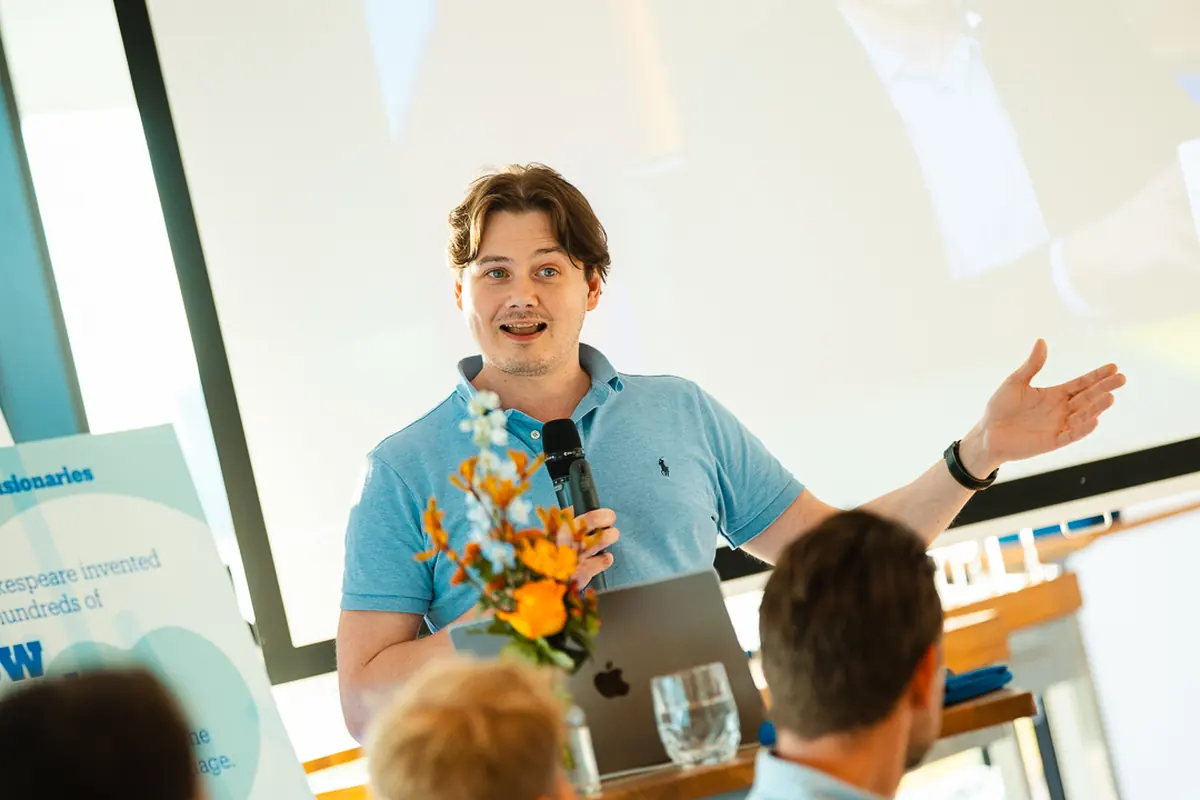
Remy Gieling
Mede-oprichter, AI-expert & bestseller-auteur
Tech-expert (1988) gespecialiseerd in kunstmatige intelligentie en mede-oprichter van ai.nl, The Automation Group, Proxies en eBrain.ai. Oud-hoofdredacteur van diverse zakenmerken en daardoor een geoefend verteller op het podium en in de media. Verzorgt jaarlijks 150+ AI-keynotes in binnen- en buitenland en is gastdocent aan Nyenrode. Co-auteur van zeven boeken, waaronder 'Handboek AI Strategie' en 'AI Agents', en bekend als presentator op radio en RTL Z. Reist langs de labs van OpenAI, Nvidia en Tencent en vertaalt de nieuwste doorbraken naar inzichten die leiders direct kunnen toepassen.
LinkedIn