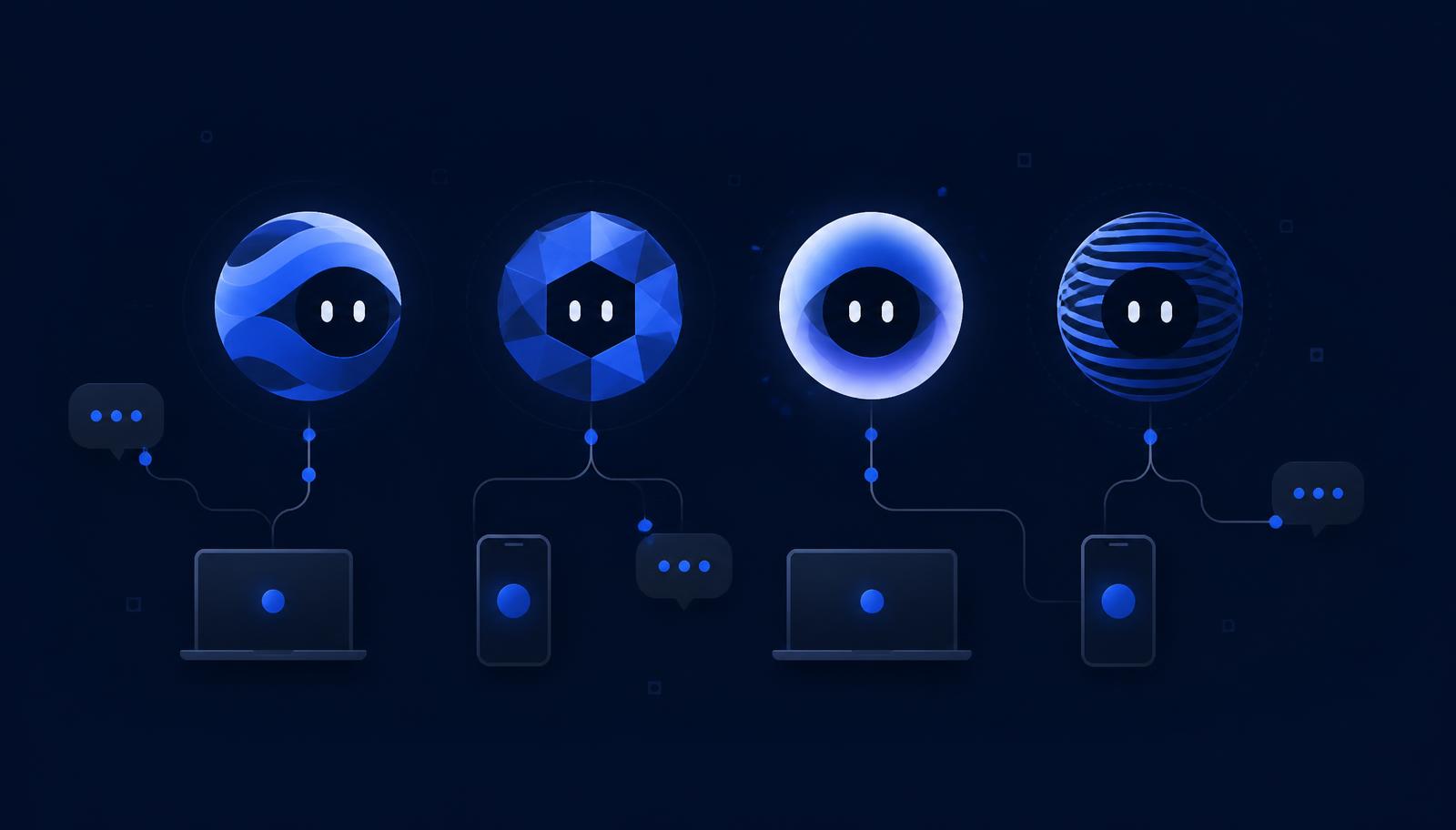
Bowling Alone 2.0: will AI agents isolate us further, or give connection back?
On Robert Putnam, the mechanism behind evaporating social capital, and the question of who will still be able to bowl together.

In 2000, the Harvard political scientist Robert Putnam published what would become one of the most influential sociological studies of recent decades: Bowling Alone: The Collapse and Revival of American Community. The title references an observation that appears trivial at first glance, but upon closer inspection lays bare something deeply fundamental.
Putnam noticed an anomaly in the data: Americans were bowling more than ever before. Bowling alleys were thriving. Yet the number of bowling leagues—the weekly fixtures where teams of colleagues, neighbours, and friends competed—was collapsing. People were still engaging in the exact same activity, but no longer together, no longer as part of a collective, and no longer with familiar faces at a recurring time.
And this proved to be no isolated incident. Putnam found the same pattern wherever he looked: church attendance was falling, trade union membership was plummeting, parent-teacher associations were emptying out, service clubs like the Rotary and Lions were ageing, and even the frequency of card nights and dinner parties with neighbours was steadily declining. Across almost the entire spectrum of American civic life, he observed thirty to forty years of uninterrupted decline.
Social capital: the invisible asset of a society
Why does this matter? Surely people are free to choose whether or not they bowl in a league? This is where Putnam introduces his core concept: social capital. By this, he means the network of relationships, shared norms, and mutual trust that allows a community to function effectively.
The word "capital" is chosen deliberately. Just like financial capital, it is an asset that enables you to get things done. Only, this asset does not reside in a bank account, but between people. Communities with abundant social capital are demonstrably healthier, safer, more prosperous, and more democratic. This is not because the people are inherently better or kinder, but because trust lowers the transaction costs of coexisting. Where there is mutual trust, there is less need for control, less litigation, and less of the suspicion that makes everything sluggish. You lend your neighbour a ladder without drafting a contract. You help a colleague without expecting immediate reciprocation, confident that the favour will eventually be returned.
Crucially, Putnam made a distinction that would later prove vital. There is bonding capital: the tight-knit ties within your own circle, such as family, friends, and people similar to yourself. Then there is bridging capital: the looser, weaker ties with people outside your bubble, such as a teammate from a different neighbourhood or a club member from another profession. It is precisely these weak ties that generate jobs, opportunities, and social mobility. We have known this since the sociologist Mark Granovetter's famous research into "the strength of weak ties". Your next job rarely comes via your best friend; it comes via an acquaintance from an entirely different network.
How social capital is forged—and why that poses a problem
Putnam's most important insight is perhaps this: social capital is not built through grand gestures, but through repeated, incidental, and semi-obligatory contact. The weekly league night. The monthly PTA meeting. The Sunday church service. You showed up for the bowling, the agenda, or the sermon. The trust was merely a by-product.
That "semi-obligatory" element is essential. You actively chose to join at the outset, but subsequently, you turned up even on evenings when you felt lethargic. It is precisely there, in that repetition without immediate cause, that relationships are forged solidly enough to bear weight. No one builds deep trust off the back of a single good conversation. Trust is the sediment of hundreds of small, seemingly insignificant encounters.
This explains why the decline occurred so quietly. Who or what did Putnam identify as the culprit? He cited multiple factors: time pressure, dual-income households, suburbanisation, longer commutes, and generational shifts. But according to his analysis, the single greatest offender was the television.
Not because watching television is inherently bad. It is about the mechanism: television made staying at home every evening just a fraction more appealing and slightly easier than going out. It offered effortless entertainment, companionship without obligation, and relaxation without the hassle. Nobody ever consciously decided: "I am going to quit my community." It happened one comfortable evening at a time, decade after decade, until the leagues were empty and no one could pinpoint exactly when it all went wrong.
Technology that eliminates friction inadvertently strips away the human encounters hidden within that friction.
Fast-forward to today: the era of the AI agent
A quarter of a century later, we find ourselves on the cusp of a new technological wave. First came the TV. Then came social media, which promised connection but largely delivered parasocial relationships: we follow thousands of people yet no longer know our neighbours. And now, enter the AI agents.
An agent is not merely a chatbot answering queries; it is a system that acts on your behalf. It reads and replies to your emails. It schedules your meetings and reschedules them when clashes occur. It calls suppliers, compares quotes, and negotiates terms. And the ultimate endgame the tech sector is driving towards is crystal clear: soon, my agent will talk to your agent. Two systems coordinating, organising, and preparing decisions on our behalf, leaving us to step in only for the final signature.
Viewed in isolation, every step in this direction is entirely rational. No one enjoys scheduling emails. No one misses the back-and-forth over finding a meeting slot. The promise of the AI agent is exactly the same as that of the television, only applied to our professional and administrative lives: eradicate friction, prioritise convenience.
And that is where, for anyone who has read Putnam, an uneasy feeling begins to creep in. This brings us to the central question of this article: will AI agents cause us to bowl alone even more? Or is this, conversely, the very technology that will restore connection, by finally freeing up time for genuine human interaction?
The pessimistic view: this is television, but everywhere
The pessimist reasons along the lines of Putnam's mechanism—and that mechanism fits disturbingly well.
Revisit where social capital is forged: in repeated, incidental, semi-obligatory contact. Translate that to working life, and you see that much of this contact occurs precisely within the "inefficient" moments that agents are poised to eliminate. The phone call that started about an invoice and segued into a chat about the children. The meeting preceded by five minutes of small talk. The negotiation where you learned to read the other party, slowly building trust. The coordination that could technically have been a single email, but which ensured you actually spoke to one another every week.
These moments were never purely transactional. They were the bowling nights of working life. The transaction was merely the pretext; the relationship was the by-product. Automate the pretext away, and the by-product silently vanishes with it.
Add to this a second concern: atrophy. Social skills are muscles. Negotiating, navigating a difficult conversation, de-escalating a conflict—if you systematically outsource these to an agent, your proficiency will degrade. And when people become worse at something, they tend to avoid it even more. It becomes a self-reinforcing downward spiral, much like what GPS navigation systems did to our innate sense of direction.
Moreover, history offers little reassurance about how newly liberated time is spent. In 1930, the economist John Maynard Keynes predicted that thanks to productivity growth, his grandchildren would enjoy a fifteen-hour working week. The productivity growth was delivered in spades. The leisure time, largely, was not: it was filled with more work, more consumption, and naturally, more screen time. Putnam's television lesson is precisely this: freed-up evening hours did not flow towards the bowling club, but towards the path of least resistance. Why should it be any different this time?
And just as before, no one will ever actively decide to stop engaging in human contact. It will happen one delegated task at a time.
The optimistic view: finally, time for the human element
However, there is a counter-narrative, and it warrants equally serious consideration.
The optimist begins by correcting the pessimist: most of what agents will take over was never genuine connection in the first place. It was coordination noise. Be honest: in how many of your thirty daily emails did trust actually grow? How much social capital was generated during the seventh back-and-forth about a meeting slot, while filling out forms, or when chasing a quote? Much of what we label "communication" is merely transactional traffic masquerading as contact, bringing nobody closer together. In fact, it drains the time and energy that could have been devoted to authentic interaction.
Furthermore, Putnam himself did not solely point the finger at the TV. He also cited time pressure and the rise of dual-income households as major drivers behind the hollowing out of civic life. People did not abandon the PTA because they no longer believed in it, but because their diaries were full. If AI agents can structurally alleviate that pressure—with less admin, less logistical wrangling, and fewer evenings spent catching up on work—then we are tackling one of the root causes of the problem. The washing machine freed up time that was partly redirected to higher pursuits. Why couldn't the AI agent do the same?
There is a third argument: scarcity drives up value. As routine contact becomes automated, genuine human interaction will become rarer, and therefore more precious. We are already seeing this pattern emerge: "handmade" and "personal" have become premium signals in a world of mass production. It is highly conceivable that human attention will follow suit: the account manager who actually picks up the phone, the team that physically convenes, the organisation that deliberately curates human connection rather than leaving it to chance. In this scenario, agents actually force us to elevate connection from a mere by-product to a core priority.
The optimist, therefore, does not see a television, but a vacuum cleaner: technology that takes over the drudgery, making room for the things that only humans can do.
The third, under-asked question: for whom?
So far, this reads like a classic debate between techno-pessimists and techno-optimists. But there is a third dimension that remains critically underexplored by both camps, and it might be the most crucial of all: distribution. Because the question is not simply whether agents will erode or enhance connection. The question is: for whom?
Consider first the economic divide. Those with autonomy, capital, and control over their own time will use agents to buy back hours, spending them on networking, family, and community groups—the very things that enrich a life and career. But those at the bottom of the labour market will experience this same technology from the other side. There, the agent is not an assistant, but the boss: an algorithm that plots routes, measures performance, and allocates shifts. And as a customer or citizen in that demographic, you will not be greeted by a human, but by a chatbot acting as the front desk. Human contact risks becoming a luxury good. A human doctor, advisor, or account manager for those who can afford it; a bot for everyone else.
Then consider the fault line of social capital itself. Recall the distinction between bonding and bridging. Agents that filter, pre-select, and optimise everything for us will primarily reinforce our existing circles: they will schedule the meetings we already wanted, with the people we already knew. But the weak ties outside our bubble will be the first casualties. Serendipitous encounters, the contacts you would never proactively schedule—these will not survive rigorous optimisation. Yet it is exactly that bridging capital that acts as the engine for equal opportunity and social mobility. A society in which AI agents optimise everyone's daily lives could easily become a society where everyone simply sits more efficiently inside their own silo.
Finally, there is the skills gap: individuals with strong social skills will use AI to free up more time for the high-value conversations they excel at. Meanwhile, those who already find social interaction challenging are handed a comfortable escape route by their digital agent. The divide will thus widen at both ends simultaneously.
Viewed through this lens, the primary threat is not so much a new Bowling Alone, but something far more insidious: a bifurcated outcome. One group, empowered by their agents, returns to bowling together. The other group is left behind to bowl alone, with only an algorithm for a teammate.
Conclusion: the technology dictates nothing, but the default setting dictates everything
What, then, is the honest answer to our central question? It is this: the technology itself does not enforce either of these outcomes. Television made us passive, but no one forced us to watch it. AI agents can give us back time for human connection, exactly as the optimist outlines.
However, Putnam's most profound lesson is that social capital rarely perishes by conscious decree. It perishes as the collateral damage of convenience: one comfortable choice at a time, entirely unnoticed, until the league stands empty. And the default setting of AI agents undeniably pushes us towards both the pessimistic and the unequal outcome: zero friction, maximum convenience, a free bot for the masses and human interaction for those who can afford it. Unless, that is, we deliberately design and organise against the grain.
In practical terms, this means deploying agents to strip away the noise, while actively reallocating that freed-up time towards human contact, rather than just the next task or the next screen. For organisations, it means no longer treating human encounters as a residual byproduct that will magically happen on its own, but as something that must be actively curated now that the "obligatory" pretexts are vanishing. And for society at large, it means guarding against human contact becoming a premium product, ensuring that the AI agent does not function as a helpful assistant for some, and a relentless overseer for others.
The question, therefore, is not whether we will soon be bowling alone again. The question is who will still have the privilege of bowling together, and what we are doing today to ensure that remains a possibility for everyone.
By all means, let your agent book the lane. But do the bowling yourself. With the whole team.
Further reading: Robert D. Putnam, "Bowling Alone: The Collapse and Revival of American Community" (2000); Mark Granovetter, "The Strength of Weak Ties" (1973); John Maynard Keynes, "Economic Possibilities for our Grandchildren" (1930).

// About the author
Job van den Berg
Mede-oprichter, AI Keynote Spreker & Techondernemer
Tech-ondernemer (1989) met een achtergrond als socioloog (Research Master (MSc) in statistiek en sociologie) en een van de meest gevraagde keynote sprekers over AI en data in Nederland. Als mede-oprichter van Ai.nl, The Automation Group en Proxies leidt hij engineers die agentic AI van prototype naar productie brengen binnen enterprises. Op het podium vertaalt Job die hands-on praktijk naar concrete strategieën. Eerder was Job Chief Data bij o.a. DPG Media en Kantar. Hij is co-auteur van 5 boeken over AI waaronder 'AI Agents' en 'Handboek AI Strategie' en een veelgevraagd expert in de landelijke media.
LinkedIn