AI may make organisations more united than ever
Success with AI depends less on individual AI experts and more on an organisation's ability to learn and take responsibility together.
There are always people who talk about AI with complete confidence, as if they know exactly how it works, which use cases matter and how organisations should handle it. That confidence is rarely a sign of real certainty. More often it is a way to cover up doubt.
Reality is far messier. Almost everyone is still experimenting. New models, applications and ways of working follow each other at speed. What looks impressive today can be obsolete tomorrow. Organisations try things out, hit limits and only discover along the way where AI actually adds value.
Everyone is still fumbling, in other words. And that may hold the real lesson. Success with AI will depend less on individuals who position themselves as AI experts, and far more on an organisation's ability to learn together.
AI is not an individual skill
In many organisations AI is still treated as a personal competency. Whoever prompts well, knows the newest tools and experiments most is quickly seen as having strong AI skills. That picture is too narrow.
Of course people need to learn to work with new technology. But real value only appears when individual experiences are shared. What worked for one colleague? Where did it go wrong? Which assumptions did the model make? Which sources turned out to be reliable? When did AI save time, and when did checking the output cost more time than it saved?
As long as that knowledge stays with individual users, the organisation barely learns. This is why togetherness in experimenting with AI matters so much. Not everyone has to use the same tools or hold the same expertise. But a culture has to emerge in which people share experiences, correct each other and jointly discover what responsible and effective use of AI means.
The organisations that get good at this are not the ones where everyone confidently claims to have mastered AI. They are the ones where people can easily say: this worked, this failed, this I do not understand yet, and here I need someone else.
From having knowledge to judging knowledge
AI also changes our relationship with knowledge. Traditionally, expertise was tied to how much someone knew. The expert held the knowledge, had built up experience and could therefore make better decisions.
That expertise does not disappear. If anything it becomes more important. But the way we use it changes.
AI can gather, summarise, compare and interpret enormous volumes of information. Simply having access to knowledge is no longer a differentiator. The important question becomes: can you judge whether that knowledge is correct?
That requires something else. You must recognise which information is relevant, which sources are reliable, which assumptions sit underneath an analysis and where the errors might be. You need enough substantive knowledge not just to read an AI output, but to assess it.
Accountability becomes a core skill
One of the most important professional skills in a world of increasingly capable AI may well be the ability to take responsibility for decisions that are partly based on AI.
A model can run an analysis. It can compare hundreds of documents, spot patterns and formulate a proposal. An AI agent may even execute the next step autonomously. None of that removes human responsibility. Quite the opposite.
Someone ultimately has to be willing to say: I understand what this analysis is based on, I have enough confidence in the knowledge used, and I stand behind the decision that follows from it. That is fundamentally different from saying: the AI concluded this.
A model cannot carry organisational responsibility. It cannot put a professional reputation on the line, cannot make a moral judgement from an organisation's context and cannot account for a decision that turns out badly. People will have to keep doing that.
Expertise takes on a different meaning
This creates an interesting paradox. AI makes knowledge more accessible while raising the value of people who understand a subject deeply enough to judge the quality of that knowledge.
The expert of the future may not be the one who always has the answer immediately. It is the one who knows which questions to ask. Who recognises when a model phrases something convincingly without strong enough evidence. Who knows which expertise is missing and when a second opinion is needed. And above all: the one willing to take responsibility.
The more information becomes available, the easier it gets to hide behind it. There is always an analysis, dataset, model or report that supports a given decision. The real challenge is not to gather even more information, but to be able to say at some point: we know enough to make a choice, and we stand behind it.
Responsibility becomes shared more often
As AI plays a bigger role in important decisions, it becomes harder for one person to oversee all relevant knowledge and risks alone. Decisions will more often require different kinds of expertise.
- A domain expert understands the subject matter.
- A data expert understands the information used.
- Someone else understands the legal or ethical consequences.
- Someone else again knows the operational implications.
Responsibility therefore becomes not only more important, but more collective. That can change organisations. Shared responsibility requires people to talk to each other earlier, to make assumptions explicit, to dare to contradict each other and to make it normal to name uncertainty before a decision is made. AI may turn out to be the technology that makes collaboration more necessary.
From individual certainty to collective trust
That is a far more interesting perspective on AI than the endless debate about who writes the best prompts or who adopts the newest tool first. AI forces organisations to rethink how knowledge is built, how decisions are made and who carries responsibility for them.
That does not require a culture where everyone pretends to understand everything. The opposite is more effective: an organisation where people can openly flag uncertainty, where experiments are shared, where mistakes are not hidden but used to get collectively smarter, and where expertise does not mean always being right but understanding enough to form a judgement and own it.
Perhaps AI will make organisations more united than ever. Not because AI creates connection by itself, but because nobody can fully grasp this shift alone. We will have to experiment together, build knowledge together and increasingly take responsibility together for the decisions that follow. That may well be one of the most important AI skills of the future.
// About the author
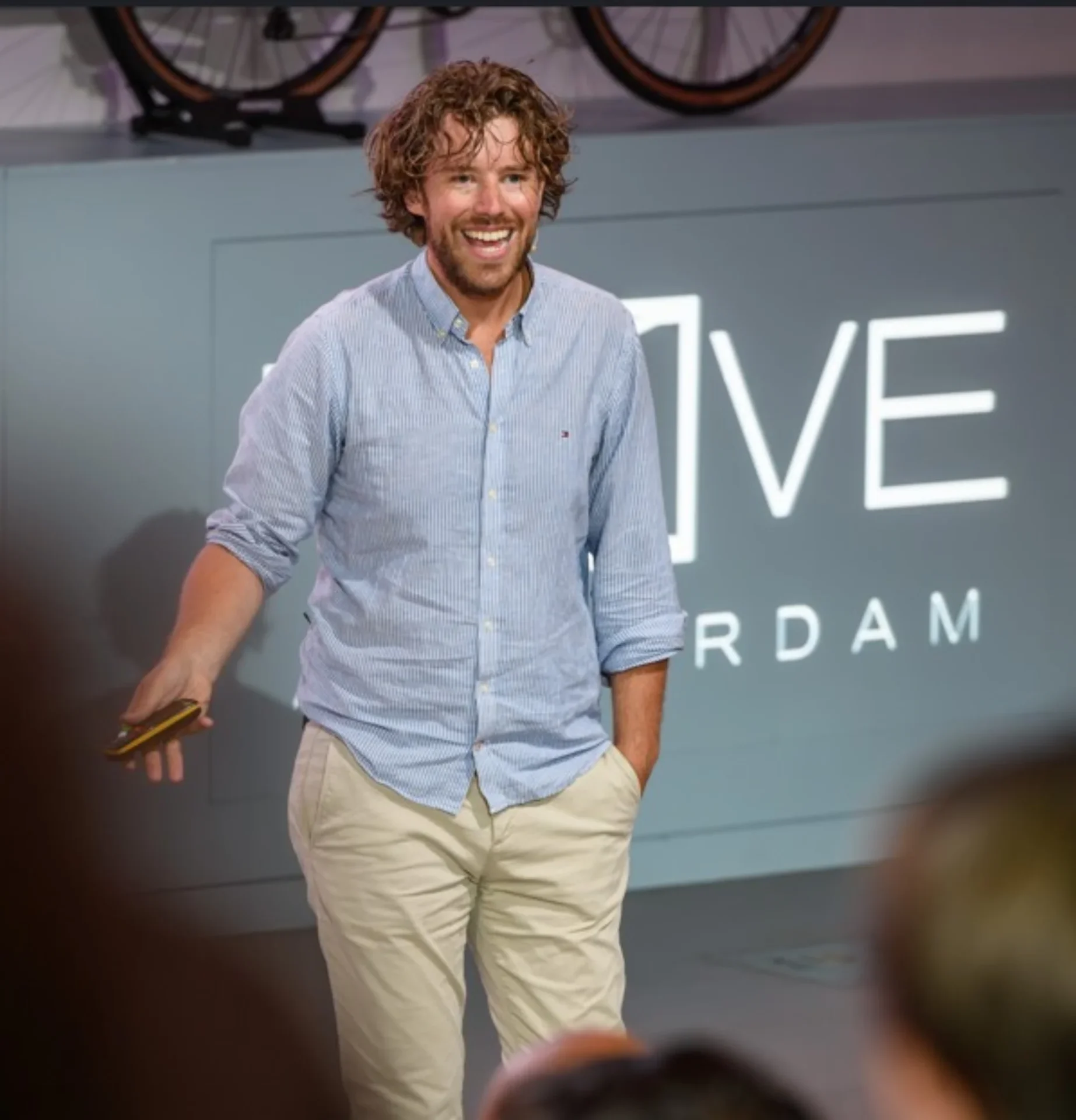
Job van den Berg
Mede-oprichter, AI Keynote Spreker & Techondernemer
Tech-ondernemer (1989) met een achtergrond als socioloog (Research Master (MSc) in statistiek en sociologie) en een van de meest gevraagde keynote sprekers over AI en data in Nederland. Als mede-oprichter van Ai.nl, The Automation Group en Proxies leidt hij engineers die agentic AI van prototype naar productie brengen binnen enterprises. Op het podium vertaalt Job die hands-on praktijk naar concrete strategieën. Eerder was Job Chief Data bij o.a. DPG Media en Kantar. Hij is co-auteur van 5 boeken over AI waaronder 'AI Agents' en 'Handboek AI Strategie' en een veelgevraagd expert in de landelijke media.
LinkedIn