Reverse Engineer Anything (REA): Everything You Need to Know
Short answer: REA (Reverse Engineer Anything) is an open-source MCP server, published on October 7, 2026, that enables AI agents such as Claude Code, Codex, and Cursor to decompile, analyze, and recreate the functionality of software without seeing the source code. Within a few days, the project went from under 10,000 to over 110,000 GitHub stars. Below, we answer the most important questions about the trend.

Short answer: REA (Reverse Engineer Anything) is an open-source MCP server, published on 7 October 2026, which allows AI agents such as Claude Code, Codex, and Cursor to decompile and analyse software, and rebuild its functionality without seeing the source code. Within a few days, the project went from under 10,000 to over 110,000 GitHub stars. Below, we answer the most important questions about the trend.
What is Reverse Engineer Anything (REA)?
REA is an open-source tool that connects AI agents to professional reverse-engineering software, allowing an agent to independently figure out how a program works. The tool was created by a developer using the pseudonym morluto and is available on GitHub as morluto/rea.
Technically, REA is an MCP server. MCP (Model Context Protocol) is the standard through which an AI agent can operate external tools. REA bundles existing integrations and makes them usable with a single installation command.
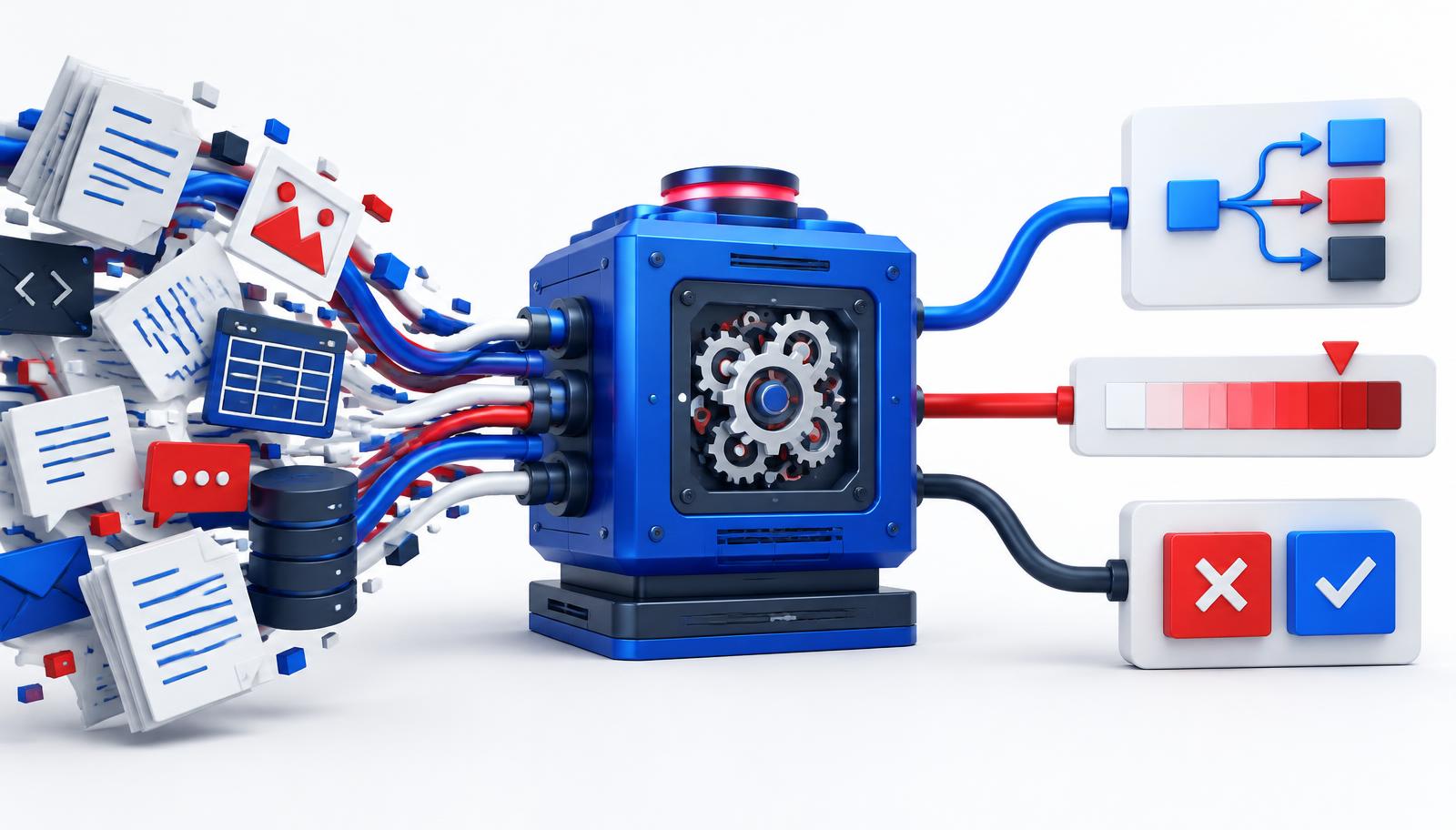
The core concept in one sentence: REA allows an AI agent to translate machine code back into readable code, track a program's behaviour, and rebuild that logic in its own project.
How does REA work exactly?
REA connects an AI agent to three well-known reverse-engineering tools: Ghidra (developed by the US NSA), IDA Pro, and Hopper. With these, the agent goes through four steps:
- Decompiling: machine code is converted back into readable code.
- Analysing: the agent tracks what the program does while it runs.
- Providing evidence: the agent shows what the conclusions are based on.
- Rebuilding: the discovered logic is rewritten in a separate project.
The example from the manual: the agent investigates the search function of the Notes app and rebuilds a comparable function.
Which AI agents work with REA? Claude Code (Anthropic), Codex (OpenAI), Cursor, Gemini CLI (Google), and Grok Build.
What software can REA analyse? Windows and Mac programs, Electron apps, .NET software, Android apps, websites, and firmware.
Does everything run locally? No. The analysis runs on your own computer, but code snippets go to the AI provider of the agent.
Why is REA so popular right now?
In October 2026, REA grew into one of the fastest-rising projects on GitHub, because it suddenly makes advanced reverse engineering accessible to anyone with an AI agent.
| Time | What happened |
|---|---|
| 6 October 2026 | Under 10,000 GitHub stars |
| 7 October 2026 | Official publication of REA |
| 10–11 October 2026 | Around 25,000 new stars per day |
| Mid-October 2026 | Over 110,000 stars and more than 30,000 forks; at the top of the GitHub trending list |
Furthermore, the tool attracted attention through high-profile examples. Shortly after the launch, browser versions of classic games like Half-Life and GTA V appeared. The GTA version was taken offline within hours. According to Destructoid, Rockstar, Activision, and Bethesda were considering legal action. It is not clear whether REA was used in every project.
Is the technology new? No. Integrations such as GhidraMCP and IDA Pro MCP have existed since 2025. What is new is that REA bundles and simplifies them. Reverse engineer Elias Bachaalany summarised the hype in one word: "Hype."
What may you use REA for?
According to the creators, REA is intended for research, education, interoperability, preserving old software, and analysing your own or permitted programs. Cracks and stolen licence keys are explicitly prohibited.
Concrete applications:
- Security research: understanding what unknown software or firmware does.
- Legacy software: deciphering and modernising old programs without documentation or source code.
- Interoperability: making your own software work together with a closed system.
- Education: learning how professional software is structured.
How good are AI agents at this? An indication: reverse engineer Maurice Heumann had dozens of Claude Code and Codex agents reconstruct a shooter game. They rebuilt 99% of the functions in C++; 83% matched the original byte for byte after compilation. Heumann did use the official MCP integration from Hex-Rays for this, however, not REA.
Is reverse engineering with REA legal?
That depends on the purpose and the country. In Europe, you are allowed to decompile software for interoperability; rebuilding a function does not fall under this.
| Region | What applies? |
|---|---|
| Europe / Netherlands | Decompiling for interoperability is permitted (Software Directive 2009/24/EC, Copyright Act). Licence clauses that prohibit this are void. Rebuilding functions does not fall under this. |
| United States | Prohibitions on reverse engineering in licence terms are enforceable (Bowers v. Baystate, 2003). |
What is the clean-room problem? In a classic clean-room approach, one team analyses and another team builds. REA allows a single agent to do both. On Hacker News, this was called "the laundering of intellectual property".
What are the risks and limitations of REA?
- Data breach or breach of contract: code snippets go to the AI provider (Anthropic, OpenAI, Google). Analysing software under confidentiality can thus violate an NDA.
- Vulnerable enterprise apps: Electron apps such as Slack, Discord, and Visual Studio Code are particularly exposed, because their code is located on the user's computer. Experts advise keeping valuable logic on your own server.
- Technical boundaries: heavily obfuscated and encrypted software remains difficult for AI agents.
- Too many tools: Duncan Ogilvie (creator of IDA Pro MCP and x64dbg) doubts whether a model performs better with dozens of tools simultaneously.
How do you start responsibly with REA?
Installing takes one command via the repository morluto/rea on GitHub; the manual and terms of use are also located there. Go through this checklist beforehand:
- Only analyse software that belongs to you or for which you have permission.
- Check the licence terms and the applicable law (EU or US).
- Do not send code under an NDA to an external AI provider.
- Document why you are analysing, for example, for interoperability or security.
- Are you working on your own software? Keep critical logic on the server.
Frequently asked questions about REA
Who created REA? A developer under the pseudonym morluto, who published REA on 7 October 2026.
Is REA free? REA is open source and available on GitHub. However, you do pay for the AI agent you connect to it.
What does REA stand for? Reverse Engineer Anything.
Do I need the source code of a program? No. REA works on compiled software, such as an .exe, app, or firmware.
Can REA analyse every program? Not always. Software with heavy obfuscation or encryption remains difficult.
What should software companies do now? Keep valuable logic on the server as much as possible instead of in the client app.
Sources
- AI Insider: REA allows AI agents to analyse any software
- AI Insider: What is MCP?
- GitHub repository morluto/rea (manual and terms of use)

// About the author
Job van den Berg
Mede-oprichter, AI Keynote Spreker & Techondernemer
Tech-ondernemer (1989) met een achtergrond als socioloog (Research Master (MSc) in statistiek en sociologie) en een van de meest gevraagde keynote sprekers over AI en data in Nederland. Als mede-oprichter van Ai.nl, The Automation Group en Proxies leidt hij engineers die agentic AI van prototype naar productie brengen binnen enterprises. Op het podium vertaalt Job die hands-on praktijk naar concrete strategieën. Eerder was Job Chief Data bij o.a. DPG Media en Kantar. Hij is co-auteur van 5 boeken over AI waaronder 'AI Agents' en 'Handboek AI Strategie' en een veelgevraagd expert in de landelijke media.
LinkedIn