How to connect ChatGPT or Claude with your email, calendar, database, or other applications
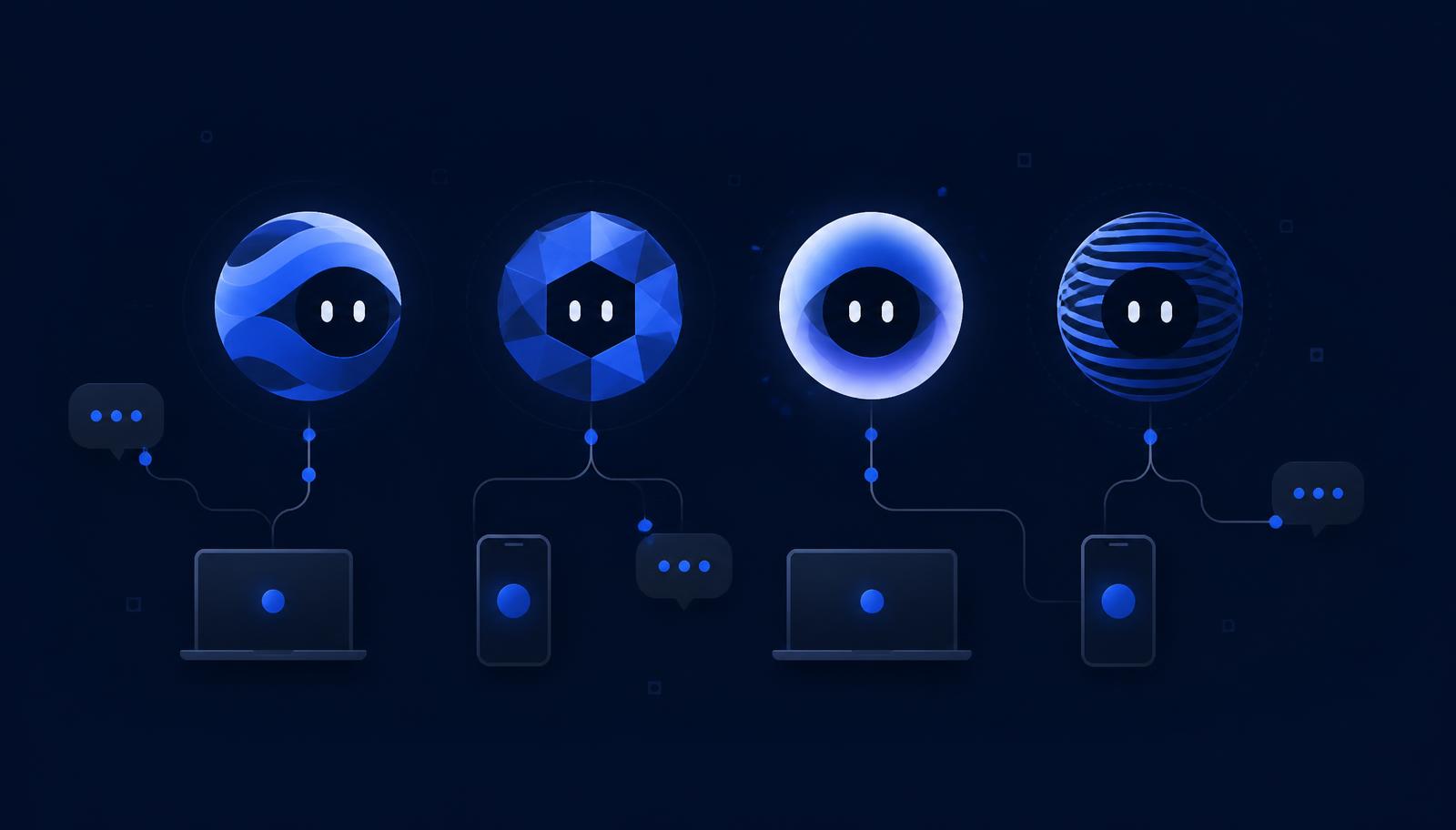
With the Model Context Protocol (MCP), you can give ChatGPT and Claude superpowers by linking them to your own systems-effectively activating a USB-C port for your language model.

We have grown accustomed to the idea of ChatGPT helping with writing texts, summarizing documents, and brainstorming new ideas. However, what many people do not yet know is that ChatGPT has recently become capable of communicating with your own applications, documents, and data sources. This transforms the chatbot from a clever assistant into a full-fledged personal digital employee.
From generic to personal
Until recently, ChatGPT could primarily discuss general, public knowledge-things you could also find via Google, such as summaries of reports, explanations of concepts, or writing texts based on universal sources.
The major breakthrough occurred when OpenAI activated a feature in the spring of 2025 that allowed users to link ChatGPT to personal data and systems. Think of your calendar, email, cloud storage, CRM, or even your internal databases. Suddenly, ChatGPT could provide more than just generic answers; it could work specifically with your proprietary business information.
The technology behind this breakthrough is called the Model Context Protocol (MCP).
What is the MCP protocol?
The Model Context Protocol was introduced in late 2024 by the AI company Anthropic-known for their AI chatbot Claude. In the most recent versions of Claude, we already saw how the bot could connect to external systems in a secure and structured manner via MCP.
💡 Experts now refer to MCP as ‘the USB-C port of language models’: a standardized, universal way to connect AI models with other systems, databases, and applications. Just as USB-C makes it possible to connect any device regardless of brand or platform, MCP does the same for language models.
MCP does not just enable generative AI; it introduces a form of interactive, contextual AI: an AI that understands your specific situation and performs tasks independently within that context.
How to activate it in ChatGPT
OpenAI recently added this new functionality to ChatGPT within the so-called "Connectors" environment. The option is available to users of paid versions, including ChatGPT Plus and Team accounts.
You can activate it as follows:
- Go to https://chat.openai.com
- Click on your profile picture in the top right
- Go to Settings
- Click on the Connectors tab
- Choose from two options:
- Standard Connectors: for example, with Google Drive, Dropbox, Slack, Microsoft Teams, or HubSpot
- Custom Connection: manually add a connector via a self-hosted MCP server
This functionality is remarkably user-friendly; most connections can be set up in a few clicks and work directly from the web environment. This makes ChatGPT accessible to both technical and non-technical users.
.webp)
How it works in Claude (Desktop)
It is also possible to work with MCP in Claude, Anthropic's AI assistant. However, this requires slightly more technical steps, as the function is hidden somewhat deeper within the settings of the desktop version.
Follow these steps:
- Open the Claude Desktop App
- Click on your profile picture or settings menu
- Go to Developer Settings
- Click on Edit Config
- Manually add your desired MCP servers in JSON format
While Claude's flexibility and power are impressive, it requires more technical knowledge to set up an integration. Where ChatGPT makes everything accessible via a simple GUI, Claude is especially suitable for developers and advanced users who want maximum control over their connections.

Practical examples: what can you do with it?
The applications are endless. Here are a few practical examples:
1. Connecting ChatGPT with your calendar
Simply ask ChatGPT: “What appointments do I have today?” or “What is my schedule for the week?” and you will receive an immediate overview based on your connected Google Calendar or Outlook.
2. Connecting ChatGPT with your email
Let ChatGPT summarize your emails, search for specific topics, or ask: “What was the last email from client X regarding quote Y?”
3. Connecting ChatGPT with your SharePoint or Google Drive
For example, using Google Drive or Dropbox. Ask: “What are the latest updates in the project file for client Z?” and you will receive a concise answer sourced from your own documents.
4. Connecting ChatGPT with databases
You can connect an internal sales database or Airtable and ask: “What is the status of project Delta?” or “Add a new record with this information.”
5. Connecting ChatGPT with HubSpot, Salesforce, or your CRM
Think of HubSpot or Salesforce. Ask: “Which leads should I follow up with today?” or “What was the last interaction with lead X?”
Is this Agentic AI?
A common question with these types of breakthroughs is: Is this already Agentic AI? The short answer: not quite-but it is getting remarkably close.
The current application of MCP within ChatGPT and Claude is what you could call a ‘light variant’ of Agentic AI. The AI Does not yet have oversight over the entire process, but it can:
- retrieve information from multiple sources
- execute actions in external systems
- combine tasks into mini-workflows (such as retrieving and immediately processing information)
Where a full-fledged Agentic AI takes on the orchestration of tasks and decisions-like a project manager in software form-this setup functions more as a smart, always-available employee who executes your commands and understands context.
The big step that comes next? The AI will begin planning, deciding, and combining tasks into complete processes, with you as the final director.
However, what we are seeing now is the infrastructure on which that will soon be built.
Handy list of available MCP servers
Curious which systems can already be connected via MCP? The open-source community has compiled an overview of existing servers that you can use or extend immediately. View the list here:
👉 https://github.com/wong2/awesome-mcp-servers
At The Automation Group, we connected Airtable, among others. This allows us to query, modify, and even automatically create records via the chat environment. Our internal workflows have become significantly faster and more consistent as a result.
The impact: from tool to colleague
What makes this development so special is that it fundamentally changes how we use AI. ChatGPT is no longer just used for isolated prompts like text writing or brainstorming; it is evolving into a full-fledged colleague that independently switches between tools, retrieves information, analyzes it, and performs actions.
Especially for entrepreneurs, consultants, marketers, and managers, this means a massive acceleration in productivity. And for larger organizations, it is the decisive step toward integrating AI into operational processes.
In conclusion: how will you deploy it?
The introduction of Connectors and MCP is a quiet revolution. It might not be a feature that immediately grabs headlines, but it is one that will structurally change your work.
So: are you using it yet?
What would you prefer to connect ChatGPT or Claude with?
And which repetitive tasks would you like to automate?
Let us know-we are curious about your application. We will be sharing more examples and guides on ai.nl soon.

// About the author
Remy Gieling
Mede-oprichter, AI-expert & bestseller-auteur
Tech-expert (1988) gespecialiseerd in kunstmatige intelligentie en mede-oprichter van ai.nl, The Automation Group, Proxies en eBrain.ai. Oud-hoofdredacteur van diverse zakenmerken en daardoor een geoefend verteller op het podium en in de media. Verzorgt jaarlijks 150+ AI-keynotes in binnen- en buitenland en is gastdocent aan Nyenrode. Co-auteur van zeven boeken, waaronder 'Handboek AI Strategie' en 'AI Agents', en bekend als presentator op radio en RTL Z. Reist langs de labs van OpenAI, Nvidia en Tencent en vertaalt de nieuwste doorbraken naar inzichten die leiders direct kunnen toepassen.
LinkedIn