Context Graphs: The Missing Layer in Agentic AI
Why AI agents only become effective once they learn from decision-making logic.

A senior account manager leaves after fifteen years. In that period, she closed hundreds of deals, negotiated dozens of exceptions, and built a network that knows exactly how your organization operates. Her successor is granted access to the CRM, the contract database, and all relevant systems. Yet it takes months before they function at the same level.
The reason? The systems contain the outcomes of decisions, but not the reasoning behind them. Not the context in which exceptions were made. Not the precedents that determine how similar situations are handled.
This problem is becoming acute now that organizations are deploying AI agents. Because an agent that only has access to data, but not to the organization's decision-making history, makes the same mistakes as a new employee without guidance.
The Problem
In conversations with organizations of various sizes and sectors, we recognize a recurring pattern. Companies invest in AI, build agents for specific tasks, and subsequently run into the same wall: the agent technically does what it is supposed to do, but lacks the judgment that experienced employees possess. The cause does not lie in the technology. The cause lies in what organizations have never systematically recorded: how decisions come to be.
Consider an insurer deploying an AI agent for claims processing. The agent has access to policy conditions, claim history, and all relevant documents. Yet it escalates cases that an experienced employee would handle immediately and approves claims that a human would question.
Why? Because the experienced employee knows that a similar situation occurred with client X last year, that management decided to be lenient due to the long-term relationship, and that this precedent has applied to similar cases ever since. That knowledge is nowhere to be found. It lives in heads, in old email threads, in the team's collective memory.
Or take a wholesaler where the sales department works with complex pricing agreements. The standard discount is 12%, but for healthcare organizations, 18% applies because their procurement processes take longer. For clients above a certain turnover, there is room for custom agreements, provided they are approved by a manager. And then there are the historical exceptions: client Y once received a special deal that is still active.
An AI agent tasked with drafting quotes only sees the end result in the system: the final price. It does not see the path to getting there. Not who approved what, not which precedent applied, not which considerations played a role.
The Solution
Foundation Capital introduces two concepts that clarify this problem: decision traces and context graphs.
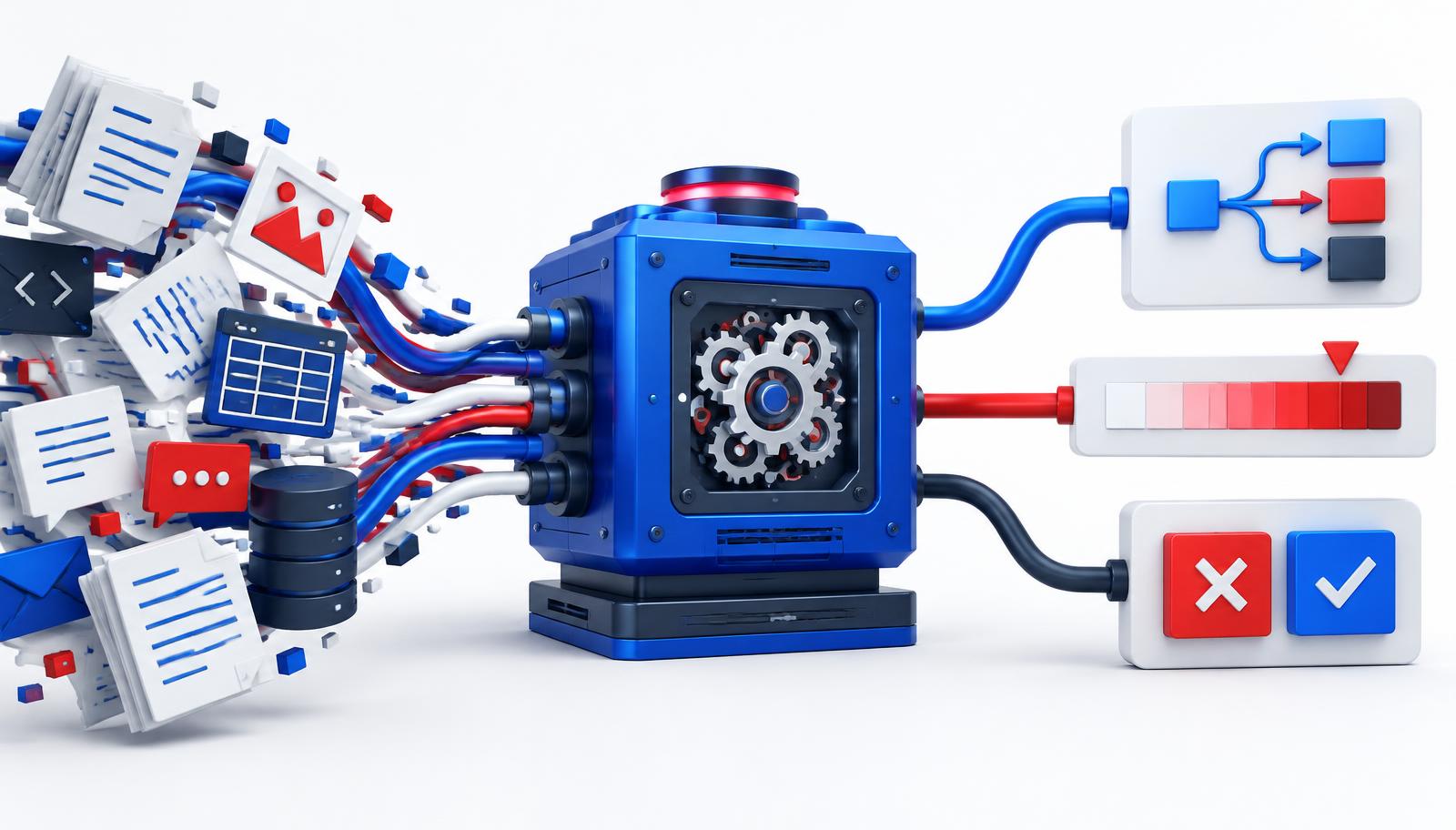
A decision trace is the recorded trail of a decision. It records the outcome, and also the inputs that were weighed, the policy that was applied, the exception that was made, and the person who approved it. It is the difference between knowing what was decided and understanding why.
A context graph is the sum of all those traces: a searchable network of decisions, linked to customers, products, employees, and policies. It is, in essence, the institutional memory of the organization, but structured and accessible to both humans and AI agents.
Urgency
As long as only humans were making decisions, the lack of decision traces was merely an inefficiency. Knowledge resided in heads, new employees learned through experience, and the system worked, albeit not optimally.
With the arrival of AI agents, this changes. An agent cannot learn by shadowing. An agent cannot simply ask a colleague how something was solved in the past. An agent is entirely dependent on what is explicitly available.
This explains why many organizations are disappointed with their initial AI implementations. The agent works according to the rules but lacks nuance. It follows policy but doesn't understand when an exception is appropriate. It has access to all data, but not to the wisdom that determines how that data should be interpreted.
Relevance
At ai.nl and The Automation Group, we view AI agents not as a replacement for human judgment, but as an enhancement of it. The question is not: how do we automate decisions away? The question is: how do we make the collective wisdom of our organization accessible to everyone, including AI? This means that successful AI implementation begins with a more fundamental question than which technology you choose. It starts with: how does the organization record its decision-making?
In practice, we see three levels where organizations can start now:
- Level 1: Capturing by exception. Every time an employee deviates from standard policy, record why. This alone creates a valuable database of precedents.
- Level 2: Capturing upon approval. When a manager approves a decision, register the outcome and the reasoning behind it. Which factors were weighed? Which precedent applied?
- Level 3: Capturing in the workflow. Integrate decision traces into your agent architecture. Every action an agent proposes and a human approves becomes part of the context graph.
What This Means for Your Organization
The organizations that derive the most value from AI agents are not necessarily those with the best technology or the largest budgets. They are the organizations that understand that an agent is only as good as the context it can consult.
Start with processes where exceptions are the rule. In complex processes, contract negotiation, complaint handling, credit assessment, the most value lies in capturing decision-making logic. And that is precisely where agents make a difference when they have access to previously unrecorded information.
View the human-in-the-loop phase as an investment. Many organizations view human intervention as a stepping stone to full automation. You can also view it as an opportunity to build decision traces. Every human correction to an agent's proposal is a precedent for the future.
Look beyond the agent itself. The true value of AI agents lies not in what they can automate today, but in the institutional memory they help build. That memory remains valuable regardless of which technology is used five years from now.
The Next Step
The concept of context graphs is still young, but the underlying principle is not. Successful organizations have always found ways to safeguard and transfer institutional knowledge. What is changing is that AI makes this explicit and searchable for the first time.
For entrepreneurs and executives considering AI strategy, the message is clear: invest in agents, and invest in the infrastructure that makes them effective. The technology for taking decisions is constantly improving. The art is making the organization's wisdom accessible to that technology.
That is what we believe in. And that is what we help organizations with. Interested? ai.nl and The Automation Group advise organizations on AI strategy and support implementation. We combine strategic insight with technical hands-on expertise through Forward Deployed Engineers. We work for organizations in various sectors, from financial services to logistics, health care to professional services.

// About the author
Remy Gieling
Mede-oprichter, AI-expert & bestseller-auteur
Tech-expert (1988) gespecialiseerd in kunstmatige intelligentie en mede-oprichter van ai.nl, The Automation Group, Proxies en eBrain.ai. Oud-hoofdredacteur van diverse zakenmerken en daardoor een geoefend verteller op het podium en in de media. Verzorgt jaarlijks 150+ AI-keynotes in binnen- en buitenland en is gastdocent aan Nyenrode. Co-auteur van zeven boeken, waaronder 'Handboek AI Strategie' en 'AI Agents', en bekend als presentator op radio en RTL Z. Reist langs de labs van OpenAI, Nvidia en Tencent en vertaalt de nieuwste doorbraken naar inzichten die leiders direct kunnen toepassen.
LinkedIn