The Shirt That Confuses AI Facial Recognition
Discover why a rainbow camouflage shirt tricks AI surveillance systems and why this clever digital disguise only works temporarily.
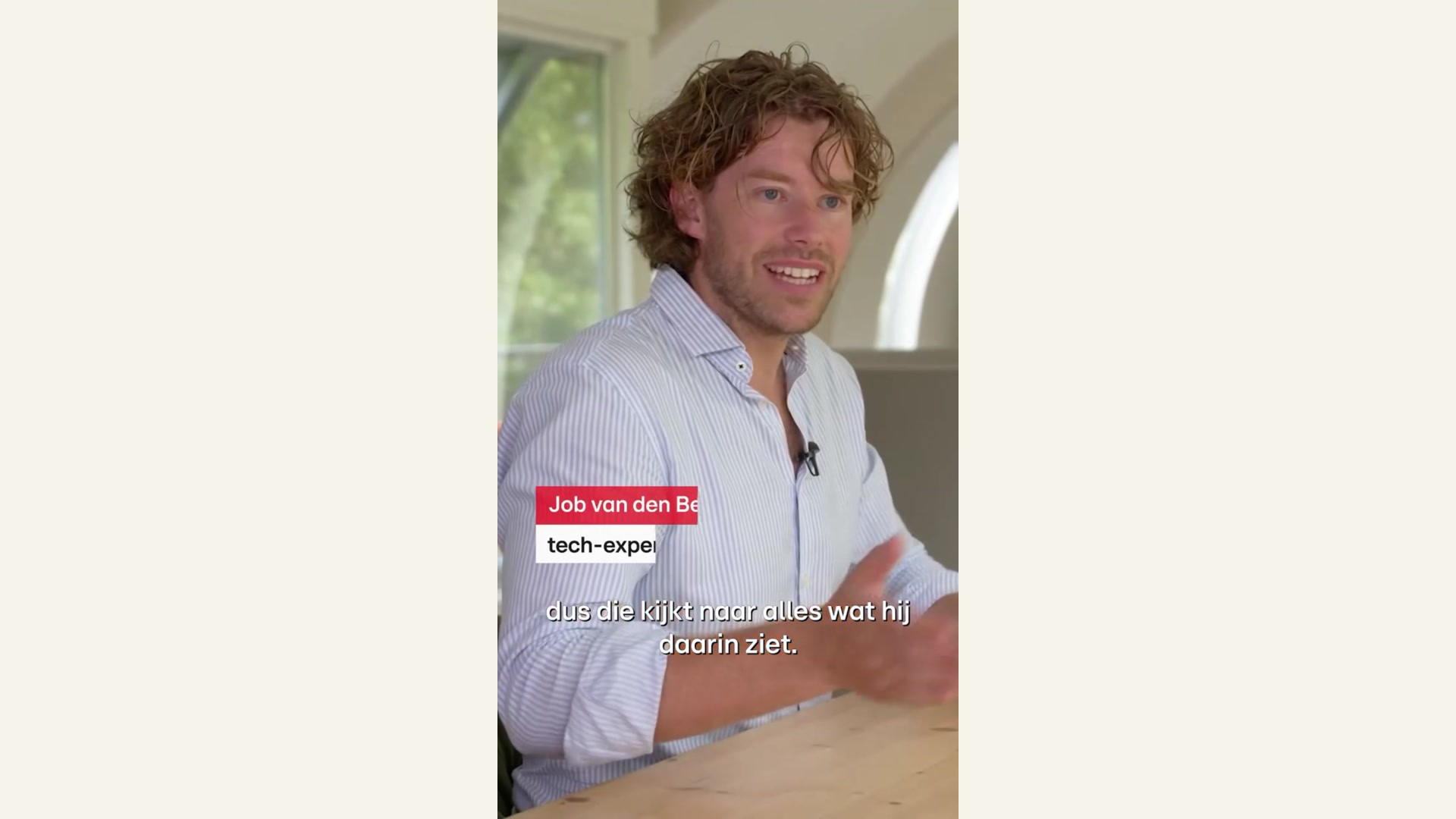
This week on EditieNL, Job van den Berg provided insights into a striking piece of clothing: the rainbow camouflage shirt, designed to protect activists from facial recognition cameras. A shirt that makes you invisible to AI sounds almost like science fiction. But the technology behind it is surprisingly logical once you understand how such systems view the world. And that is exactly what makes it so interesting: how does a simple shirt confuse an advanced AI system?
AI does not see the way we do
To understand this, we first need to establish something important: AI models do not look at a human the way we do. When you see someone walking down the street, you effortlessly recognize a person. Your brain understands what a human is, even if they are wearing a funny hat, standing half behind a lamppost or wearing a brightly colored coat. A neural network in a surveillance system works fundamentally differently. It looks at pixels and unique features, at patterns of light, color, contrast and shape, and makes a prediction based on that. It is pure statistics about what it sees and who it sees.
During its training, the model has seen millions of images of people and has learned which combinations of features statistically belong to a "human". An important detail here is that the model looks at the big picture. It does not just look at your face, but at your entire appearance, the contours of your body, the proportions and the context.
The trick behind the shirt
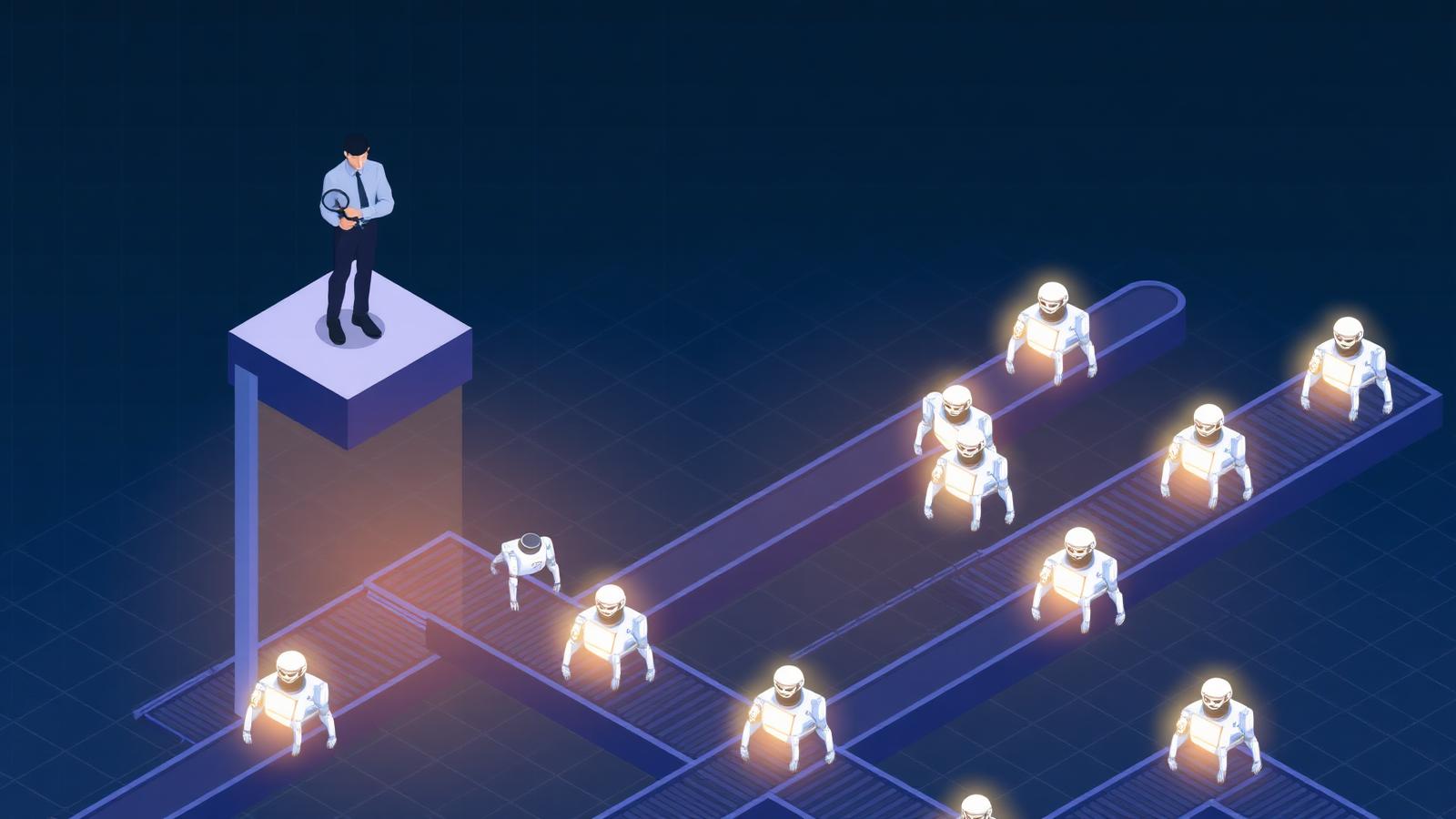
And that is exactly where the trick of this shirt lies. The busy patterns and bright colors disrupt that big picture. Where the model normally sees a recognizable human shape, it now sees a chaos of lines, colors and contrasts that do not match what it has learned. The prediction gets confused: is this a human? Something else? Multiple objects? The statistics no longer add up, and the recognition fails.
In technical terms, this is called an adversarial attack: you feed the system with input specifically designed to trick it. It can be compared to an optical illusion, but one that only works on machines. To the human eye, it is just a busy, colorful shirt. To an algorithm, it is noise that makes the entire image unreliable.
To the human eye, it is just a busy shirt. To an algorithm, it is noise that makes the entire image unreliable.
Older than AI itself
The idea is actually older than AI itself. During the First World War, navies painted their ships with what is known as dazzle camouflage: wild, contrasting patterns that did not make a ship invisible, but made it impossible for the enemy to accurately estimate its speed and course. The rainbow shirt essentially does the same thing, only the opponent is no longer a periscope but a camera powered by a neural network.
Why this only works temporarily
It sounds like a brilliant solution for anyone worried about surveillance. But there is an important caveat: this only works temporarily. Because now that we know this shirt exists, and now that it is appearing on television and in the media, AI models are simply being corrected for it. Developers add exactly these types of images to the training data, people in busy, disruptive patterns, and the model learns that this is also a human. With that, the disruption loses its power. What works as a digital invisibility cloak today will just be recognizable clothing in a few model versions.
And there is something else. The shirt is designed to disrupt from a certain perspective, usually from the front. But what if a camera tracks you from the side? Or from above, which is how many surveillance cameras are positioned? There is a good chance the model will still accurately predict and recognize you. On top of that, modern systems do not just look at your clothing or face. Technology exists that recognizes people by their gait, their posture and their silhouette. A single disrupted feature is then not enough to stay out of the picture.
Not pointless after all
Does that mean such a shirt is pointless? No, that would be an oversimplification. It makes something visible that normally remains invisible: that we are constantly being analyzed by systems we know nothing about and have no control over. The shirt is perhaps primarily a statement, a way to sharpen the conversation about facial recognition and privacy. And that conversation is desperately needed, because the technology is developing faster than the legislation surrounding it.
Ultimately, this is a cat and mouse game between privacy and technology. Every clever disruption is answered with a smarter model, and every smarter model provokes new creative countermeasures. The question is not who wins that game, but whether we as a society want it to be played at all. As long as that debate remains unsettled, people will continue to look for ways to evade the algorithmic eye. Even if it takes a rainbow shirt.

// About the author
Job van den Berg
Mede-oprichter, AI Keynote Spreker & Techondernemer
Tech-ondernemer (1989) met een achtergrond als socioloog (Research Master (MSc) in statistiek en sociologie) en een van de meest gevraagde keynote sprekers over AI en data in Nederland. Als mede-oprichter van Ai.nl, The Automation Group en Proxies leidt hij engineers die agentic AI van prototype naar productie brengen binnen enterprises. Op het podium vertaalt Job die hands-on praktijk naar concrete strategieën. Eerder was Job Chief Data bij o.a. DPG Media en Kantar. Hij is co-auteur van 5 boeken over AI waaronder 'AI Agents' en 'Handboek AI Strategie' en een veelgevraagd expert in de landelijke media.
LinkedIn